If you’re an engineer or product manager juggling tight launch windows, you know how brutal SMT assembly lead times can drag down your whole project. Last quarter, we had a client—a small robotics startup—panicking because their lead time for a 4-layer PCB jumped from our standard 7 days to 14, all because a small cap they picked was on backorder. By tweaking a few little things, we got their order back to 6 days, even with a last-minute part swap. Today I’m spilling the real, actionable stuff we do day-to-day at our SMT shop to cut lead times without messing up quality. No fancy jargon, just what works for us. SMT PCB Assembly
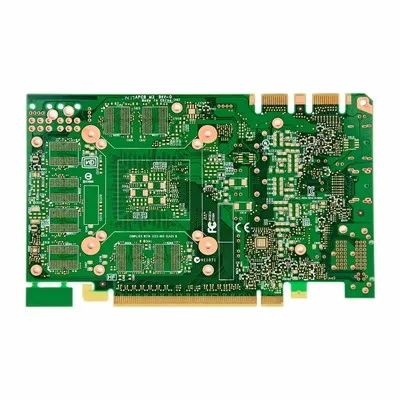
First, let’s cut to the chase: most lead time bloat doesn’t happen because our pick-and-place machines are slow. It happens before we even touch a board. I’ve seen clients submit Gerber files that are missing pad dimensions, have silkscreen overlaps with solder pads, and forget to specify a hidden component. That stuff adds hours—sometimes days—of back-and-forth, because we can’t just fire up production until all the kinks are fixed. If you’re sending files over, here’s what we beg you to double-check first: make sure every solder pad is properly defined (no overly small pads that will cause tombstoning, no pads that are half the size they should be), confirm the silkscreen doesn’t cover any pads or test points, and list every component with its exact footprint, value, and manufacturer part number (MPN). Generic parts like “0603 cap” sound easy, but if we order the wrong value, that’s a whole re-spin. We actually have a pre-submit checklist we send clients that cuts this back-and-forth by 40%—small win, but it adds up fast.
Next up: component sourcing. This is the single biggest lead time killer, bar none. We’ve had orders where 30% of the BOM is on extended lead times because the client picked a niche, obsolete part or relied on a distributor that’s backordered. Here’s the trick we use with clients: we build a “soft BOM” check before we even start quoting. We cross-reference every MPN on their bill of materials with our own stocked parts, and if something’s out of stock, we suggest a pin-compatible alternative that’s readily available. Last month, a client needed a 10µF ceramic cap that was on 8-week lead time; we swapped it for an identical-rated part we keep in 50k bulk, and cut their sourcing delay by 6 weeks. Pro tip: if you must use a niche part, let us know early, not 24 hours before production. We have a network of trusted suppliers we work with for hard-to-find parts, and we can often get them in 2-3 days if we place the order early. The worst is when someone waits until we’re done loading the pick-and-place program to say “oh, that part’s not available”—that’s a full production stop, and it messes up every timeline.
Then there’s production flow. Most people think pick-and-place is the bottleneck, but for our mid-sized runs (50-500 boards), the bottleneck is actually how we batch jobs. We used to process orders one at a time, which meant if a client needed a 100-board run in 5 days, we’d queue it between two larger jobs, pushing it back a couple days. Now we prioritize “time-sensitive” jobs—anything with a confirmed ship date in less than a week—by splitting larger production batches around them. We also pre-load all stencils and component feeders the night before production starts, instead of wasting time setting up mid-day. For example, last week a medical device client needed a 50-board prototype in 3 days; instead of slotting it in our general queue, we pulled their files the night before, set up the stencil, prepped the feeders for all their common components, and started production first thing the next morning. We knocked that job out in 2.5 days, no cuts to quality, because we didn’t waste setup time. That said, we never skip our quality check steps—we still do an optical inspection (AOI) halfway through and a functional test at the end, but we schedule those to run alongside production, not after. We used to do AOI only after the whole board was assembled, which meant if we found a defect, we had to fix every board at once. Now we run AOI while the next 5 boards are being assembled, so defects get caught faster and don’t hold up the whole line.
Something a lot of clients miss: prototyping vs. production handoff. A lot of teams use the same BOM for prototypes and full production, but that’s a mistake. Prototypes can get away with more niche parts, hand-assembled components, and simpler stencils, but full production needs parts that can be processed at high volume. We had a client who turned a prototype into a 1000-board production run last minute, and their prototype BOM used hand-placed 0201 resistors—those are tiny, they take forever to place, and we had to re-tool our pick-and-place program for volume, adding 3 days to their lead time. If you’re moving from prototype to production, flag that early, and we can help adjust the BOM to be volume-friendly without compromising performance. Also, for prototypes, we can sometimes do a “fast prototype” run—hand-assemble if needed, skip some extra tests, but only if it’s clear you don’t need full production-grade testing. Just don’t ask for a production lead time on a prototype: that’s like asking for a fast pass at Disney and a backstage tour. They’re different lines for a reason.
Wait, let’s talk about communication. This is the underrated secret to cutting lead times. We have clients who ghost us for 3 days after sending files, then ask “what’s the hold up?” when their lead time jumps. No matter how busy we are, if you tell us upfront if there’s a hard deadline, if you can tolerate minor component swaps, or if you need priority processing, we can work with you. For example, if you tell us “this is for a trade show in 7 days, can you get it done in 5?” we can rearrange our line, work extra shifts if needed (within reason), and keep you updated every step of the way. But if you don’t tell us that, we might schedule your job when our line is half-empty and another client has a priority order, which will make your lead time slower than necessary. We also send a daily update for any job with a lead time under 10 days—you get a text or an email saying “your boards went through AOI, no defects, moving to reflow” so you don’t have to call us every hour. That cuts down on back-and-forth and keeps things moving.
Let’s bust a myth here: cutting lead time doesn’t mean cutting corners. A lot of people think “fast SMT = bad quality” but that’s only true if you skip steps to rush. We’ve tested this: when we optimized our pre-production checks, batch processing, and communication, we cut average lead times by 22% last year, and our defect rate stayed exactly the same. The key is that we’re not skipping quality checks—we’re aligning them with production so they don’t add extra time. We still do all the required IPC-A-610 inspections, all the soldering checks, and all the test points, but we schedule them to run while the next batch is being made, so it doesn’t hold up the whole line.
What about small runs vs. large runs? A lot of startups only need 5-50 boards for prototypes, and those used to take 7-10 days. Now we have a dedicated small-run line that processes those in 2-5 days, depending on complexity. We keep a stock of common 0402 and 0603 components, standard stencils, and pre-set feeders for small runs, so we don’t have to set up a whole production line for 10 boards. That’s a game-changer for teams working on new products who don’t need a full 100-board run. For large runs (1000+ boards), we build in buffer time but still keep lead times reasonable—for example, a 1000-board run might take 5 days, not the 10 that some shops quote, because we batch it with other similar large runs to use our line efficiently.
Now, let’s be real: there are limits. If you need a full turnkey BOM and a 24-hour lead time, that’s almost impossible—we still have to source parts, set up the line, and test. But the tips above will get you as fast as possible, without risking your project.
At the end of the day, SMT lead time is a team sport, not something only the assembly shop controls. We can do our part to streamline our process, but you (the client) can do your part by sending clean files, communicating deadlines early, being flexible on parts, and letting us help with your BOM before you even place the order. We’re not just a shop that puts parts on boards—we’re here to help you hit your launch dates, avoid delays, and make your product work.
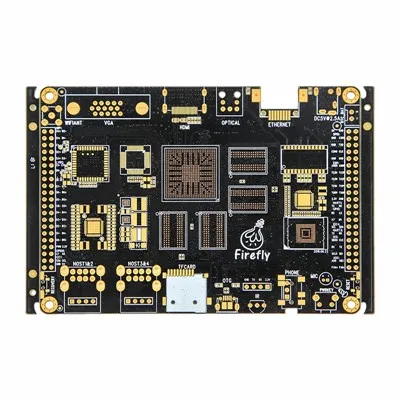
If you’re tired of waiting weeks for your next SMT order, let’s chat. We can review your Gerber files and BOM, give you a realistic lead time, and even suggest tweaks to cut your timeline down if needed. No sales fluff, just honest advice and fast, reliable SMT assembly.
References
Cable Harness IPC-A-610: Acceptability of Electronic Assemblies
*Surface Mount Technology Magazine, "Optimizing SMT Lead Times for Modern Electronics"
*Circuit Assembly Magazine, "Reducing SMT Production Delays Through Pre-Production Planning
*IPC-7093: Design and Assembly Process Implementation for Surface Mount Technology (SMT) Assemblies
Huaswin Electronics Technology Co., Ltd.
With abundant experience, we are one of the most professional SMT PCB assembly manufacturers and suppliers in China. Welcome to wholesale customized SMT PCB assembly at competitive price from our factory. If you have any enquiry about pricelist, please feel free to email us.
Address: Building A2, Hao Hai Hong Industrial Park, No.3 Yu He Road, Gong He, Sha Jing, Bao An, Shenzhen
E-mail: sales@huaswin.com
WebSite: https://www.huaswin-pcba.com/
