In the realm of business and language, the terms "Other" and "Every other" may seem deceptively simple, yet they carry distinct meanings that can significantly impact business operations, especially for someone like me who operates as an "Other" supplier. Understanding these differences is not just about grammar; it’s about ensuring that communication with clients is clear, precise, and ultimately leads to successful transactions. Other
Defining "Other"
Let’s start by unpacking the term "Other." In a general sense, "Other" refers to something or someone that is additional, different, or separate from what has already been mentioned or is being considered. It is a broad and inclusive term that encompasses a wide range of possibilities. For instance, in a list of products such as "apples, bananas, and other fruits," "other fruits" includes all fruits that are not apples or bananas, like oranges, grapes, and strawberries.
In the context of my business as an "Other" supplier, this term is incredibly versatile. I offer a variety of products and services that may not fall neatly into the mainstream or commonly recognized categories. My offerings are the "other" options that clients might seek when they need something outside the ordinary. This could include unique handicrafts, specialized software solutions, or custom – made furniture. The term "Other" allows me to present a diverse portfolio of products and services that cater to niche markets and specific customer needs.
The beauty of being an "Other" supplier lies in the ability to adapt. I can respond to emerging trends and customer demands that larger, more mainstream suppliers may overlook. For example, as the demand for eco – friendly and sustainable products grows, I can source and offer a range of "other" items such as bamboo utensils, recycled paper products, or upcycled fashion items. This adaptability gives me a competitive edge in the market, as I can position myself as a provider of unique and in – demand solutions.
Understanding "Every other"
On the other hand, "Every other" has a more specific and restrictive meaning. It implies a pattern of alternation, suggesting that something occurs or is selected at regular intervals, skipping one instance each time. For example, if I say "I visit the gym every other day," it means I go to the gym on a pattern where I skip a day between each visit.
In a business context, "Every other" can be used to describe a particular schedule or preference. A client might request a delivery of goods every other week, which sets a clear and predictable pattern. This term also has implications for quantity and selection. For instance, in a store shelf, if we are talking about every other product being on sale, we are referring to a specific set of items that follow an alternating pattern.
As an "Other" supplier, I need to be aware of how this term might be used in client requests. A client might ask for every other item from a particular product line, which would require me to carefully select and provide the items according to the alternating pattern. This requires a higher level of precision and organization compared to fulfilling a request simply for "other" items.
Comparing the two in business scenarios
When dealing with client inquiries and orders, the difference between "Other" and "Every other" can lead to very different outcomes. Let’s consider a hypothetical scenario where a client is setting up a new office and comes to me for furniture. If the client says they need "other" furniture, it gives me a wide scope. I can suggest items such as ergonomic chairs with unique designs, custom – made desks, or decorative pieces that are not commonly found in standard office furniture sets.
However, if the client requests "every other" piece of furniture, I need to follow a specific pattern. This could mean selecting every other item from a particular catalog or creating an alternating pattern based on style, color, or function. For example, I might provide a modern – style chair followed by a traditional – style chair, and so on.
Another aspect to consider is inventory management. As an "Other" supplier, my inventory is likely to be more diverse and less standardized. When fulfilling orders for "other" items, I can draw from a wide range of stock to meet the client’s needs. But for "every other" requests, I need to ensure that I have a sufficient quantity of items that can be arranged in the required alternating pattern. This may require more careful planning and forecasting to avoid stock shortages or mismatches.
Marketing implications
The difference between "Other" and "Every other" also has significant marketing implications. When promoting my services as an "Other" supplier, I can emphasize the uniqueness and diversity of my offerings. I can target customers who are looking for something different, something that stands out from the crowd. For example, I might create marketing campaigns highlighting the one – of – a – kind nature of my products, such as "Discover our other products, crafted with care and designed for those who want to be unique."
On the other hand, if I am dealing with a client who has a preference for "every other" items, my marketing approach needs to focus on reliability and precision. I can emphasize my ability to follow strict patterns and deliver consistent results. A marketing message could be something like "We guarantee the delivery of every other item exactly as requested, with unmatched accuracy and timeliness."
Communication challenges and solutions
One of the main challenges in dealing with these terms is ensuring clear communication with clients. Misunderstandings can occur if the client and I have different interpretations of whether they are asking for "other" or "every other" items. To overcome this, I make it a point to ask clarifying questions. When a client uses these terms in a request, I ask for specific details such as the criteria for selection, the pattern (if it’s an "every other" request), and any other relevant information.
I also use visual aids and diagrams when necessary to ensure that both the client and I are on the same page. For example, if a client requests every other product from a particular range, I might create a simple chart showing which items will be included in the order. This helps to avoid any confusion and ensures a smooth transaction.
Conclusion and Call to Action

In conclusion, the difference between "Other" and "Every other" is not just a matter of semantics; it has far – reaching implications for my business as an "Other" supplier. Understanding these differences allows me to better serve my clients, manage my inventory, and develop effective marketing strategies.
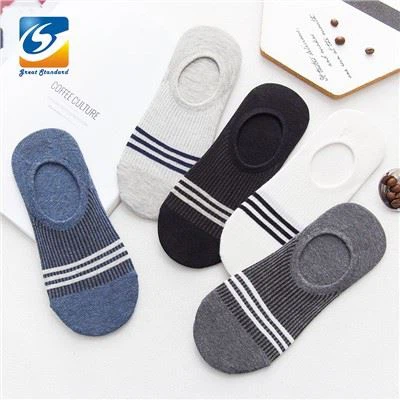
Ankle Sport Socks If you are in the market for unique products or services that fall outside the ordinary, I invite you to reach out to me. Whether you need "other" items that are tailored to your specific requirements or have a preference for "every other" item in a particular pattern, I have the expertise and resources to meet your needs. Let’s start a conversation about how I can provide you with the perfect solutions for your business or personal needs.
References
- Merriam – Webster Dictionary. Definitions of "Other" and "Every other".
- Business English textbooks on effective communication and understanding of key business terms.
Haining GS Textile Co., Ltd.
Haining GS Textile Co., Ltd. is one of the leading socks manufacturers and suppliers in China. We warmly welcome you to buy or wholesale bulk high-grade socks from our factory. All customized products are with high quality and competitive price. Contact us for more details.
Address: Room 8G, BLS Building, No.338 Haining Avenue, Haining City, Zhejiang, China
E-mail: gssales8@cngstextile.com
WebSite: https://www.gssocks.com/
