Does metalized thermal laminating film have a static – dissipative property? Metalized Thermal Laminating Film
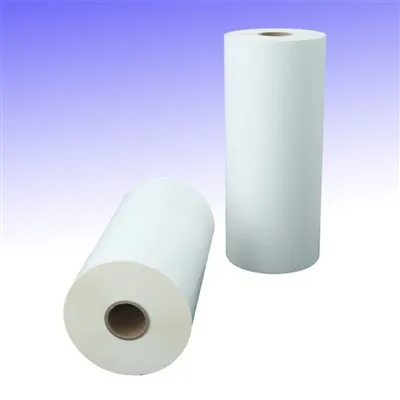
As a supplier of metalized thermal laminating film, I am often asked about the unique properties of our product. One question that frequently comes up is whether metalized thermal laminating film has a static – dissipative property. In this blog, I will explore this topic in detail, providing scientific insights and practical applications.
Understanding Metalized Thermal Laminating Film
Before delving into the static – dissipative property, it’s important to understand what metalized thermal laminating film is. Metalized thermal laminating film is a type of film that consists of a thin layer of metal, usually aluminum, deposited on a base film, such as polyester. This metal layer gives the film its characteristic reflective appearance and provides several beneficial properties, including enhanced barrier protection against moisture, oxygen, and light.
The thermal aspect of the film means that it can be bonded to a substrate using heat. This process is commonly used in the packaging industry to provide a protective and decorative layer to various products, such as food packages, labels, and book covers.
Static Electricity and Its Implications
Static electricity is a phenomenon that occurs when there is an imbalance of electric charges on the surface of an object. This imbalance can result from contact and separation between two materials, friction, or induction. In industrial environments, static electricity can cause a variety of problems, including:
- Dust and Particle Attraction: Static charges on a surface can attract dust and other small particles, which can contaminate products during the manufacturing or packaging process. For example, in the food packaging industry, dust particles attracted by static electricity can compromise the quality and safety of the food product.
- Electrostatic Discharge (ESD): Sudden releases of static electricity, known as electrostatic discharges, can damage sensitive electronic components. In the electronics manufacturing industry, ESD is a major concern as it can lead to product failures and costly repairs.
- Operational Interference: Static charges can also cause materials to stick together or to processing equipment, leading to production delays and increased waste. For instance, in the printing industry, static electricity can cause printed sheets to jam in the printing press.
Static – Dissipative Properties of Metalized Thermal Laminating Film
Now, let’s address the question of whether metalized thermal laminating film has a static – dissipative property. The answer is yes, to an extent.
The metal layer in metalized thermal laminating film acts as a conductor. When a static charge builds up on the surface of the film, the metal layer can conduct the charge away, reducing the overall static charge. This is similar to how a lightning rod works by providing a path for the electrical charge to safely reach the ground.
However, the static – dissipative ability of the metalized thermal laminating film depends on several factors:
- Metal Thickness: The thickness of the metal layer plays a crucial role. A thicker metal layer generally has better conductivity and can more effectively dissipate static charges. In our production process, we can control the metal thickness to optimize the static – dissipative properties according to the specific requirements of our customers.
- Base Film Properties: The base film on which the metal is deposited also affects the static – dissipative performance. Some base films have better electrical insulation properties, which can slow down the dissipation of static charges. We carefully select base films to ensure they complement the metal layer and enhance the overall static – dissipative performance.
- Environmental Conditions: The humidity and temperature of the environment can significantly impact the static – dissipative properties of the film. In high – humidity environments, the moisture in the air can help to dissipate static charges more easily. On the other hand, in low – humidity environments, static charges are more likely to build up, and the film’s ability to dissipate them may be reduced.
Applications in Industries
The static – dissipative property of metalized thermal laminating film makes it suitable for a wide range of applications in various industries:
- Electronics Packaging: In the electronics industry, protecting sensitive components from ESD is of utmost importance. Metalized thermal laminating film can be used to package electronic devices, providing a protective layer that dissipates static charges and prevents damage from ESD.
- Food Packaging: As mentioned earlier, static electricity can attract dust and particles, which can contaminate food products. By using metalized thermal laminating film with static – dissipative properties, food manufacturers can reduce the risk of contamination and ensure the quality of their products.
- Printing and Labeling: In the printing and labeling industry, static electricity can cause issues such as sheet jams and uneven ink transfer. Metalized thermal laminating film can be used to laminate printed materials, reducing static charges and improving the overall printing and processing efficiency.
Testing and Quality Assurance
As a responsible supplier, we conduct rigorous testing to ensure that our metalized thermal laminating film meets the required static – dissipative standards. We use specialized equipment to measure the surface resistance of the film, which is an indicator of its ability to dissipate static charges. A lower surface resistance value indicates better static – dissipative performance.
We also perform real – world simulations to test the film’s performance under different environmental conditions, such as high and low humidity. This allows us to provide our customers with accurate information about the film’s static – dissipative properties and ensure that it meets their specific application requirements.
Conclusion
In conclusion, metalized thermal laminating film does have a static – dissipative property, thanks to the conductive metal layer. However, its effectiveness in dissipating static charges depends on factors such as metal thickness, base film properties, and environmental conditions.
At our company, we are committed to providing high – quality metalized thermal laminating film with excellent static – dissipative properties. Whether you are in the electronics, food packaging, or printing industry, our film can help you solve static – related problems and improve your production efficiency.
Embossing Thermal Laminating Film If you are interested in learning more about our metalized thermal laminating film or have specific requirements for static – dissipative applications, please feel free to contact us for a detailed discussion. We look forward to the opportunity to work with you and provide you with the best solutions for your business.
References
- ASTM International. (Year). Standard test methods for electrical resistivity of conductors.
- Technical literature on metalized film properties from industry research institutions.
- Industry whitepapers on static electricity management in manufacturing processes.
Yantai Hongqing Packing Material Co., Ltd.
Yantai Hongqing Packing Material Co., Ltd. is one of the most professional metalized thermal laminating film manufacturers and suppliers in China, also supports customized service. Welcome to wholesale advanced metalized thermal laminating film made in China here and get quotation from our factory. Quality products and reasonable price are available.
Address: Eastern Industrial Park, Taocun, Yantai, Shandong Province, China
E-mail: cindy@ythongguang.cn
WebSite: https://www.hqingnewmat.com/
