As a diesel slurry pump supplier, I get this question all the time: how do you actually calculate the power required to run one of these hardworking pumps? A lot of folks just look for a formula online and call it good, but I’ve learned over 12 years in this business that getting this right isn’t just about plugging numbers into an equation—it’s about factoring in the stuff that trips up even the most seasoned mine or construction manager. Slurry is messy, unpredictable, and way different from clean water, so skip the basic water pump math; here’s the real breakdown I walk customers through every day. Diesel Slurry Pump
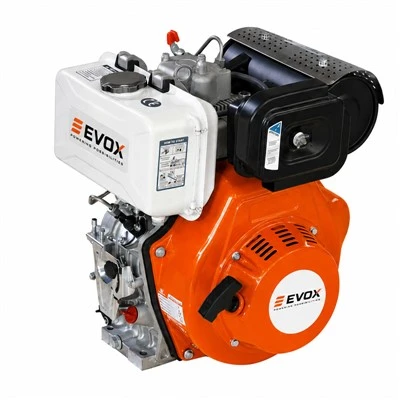
First, let’s start with what power actually means for a diesel slurry pump. Unlike electric pumps, where power ties directly to your power supply, diesel slurry pumps need to balance engine power, hydraulic load, and the beating your pump takes from abrasive slurry every day. Get this number wrong, and you’ll either have an engine that’s underpowered (stuck halfway up a mine ramp because your pump can’t move thick slurry, costing you downtime) or overpowered (wasting fuel, burning out expensive parts, and blowing your operating budget). I’ve seen both mistakes happen more times than I can count: one mine once ordered a 200 hp diesel pump for a 150 hp application, and their maintenance crew wore out the impeller twice as fast because the extra horsepower forced the slurry too hard through the pump casing, creating more friction.
Let’s break the calculation down step by step, no jargon where I can help it. First, you need two core pieces of data: the total dynamic head (TDH) the pump has to overcome, and the mass flow rate (Q) of the slurry. These aren’t the same as for clear water, so that’s where most people mess up. TDH is the total vertical distance the slurry has to move plus the friction loss from the pipe, bends, valves, and even the pump itself. For example, if you’re pumping slurry 80 meters up a mine shaft, that’s your static head right there, but if you’re using a 150mm pipe with two 90-degree bends over a 500-meter horizontal run, that adds another 15 meters of friction head. I always tell customers to get a pipe friction chart specific to their slurry type—sand slurry, gravel slurry, and mineral concentrate all have different friction factors. A 20% to 30% buffer here isn’t overkill; I’d even recommend 40% for abrasive slurries, because as the impeller wears over time, friction loss goes up, and your TDH creeps higher.
Next is mass flow rate, not just volume. Slurry isn’t water—it’s a mix of solids and liquid, so you can’t use a water flow rate here. You need to know the solids concentration (by weight or volume) and the density of the solids. For example, if you’re pumping coal slurry with 40% solids by weight, that mix is about 1.5 times denser than water, so moving 100 cubic meters of slurry isn’t the same as moving 100 cubic meters of water. I’ve had customers come to me saying they need “100 m3 per hour” of slurry, and once we test their solids, we have to adjust that number up by 50% to get the right mass flow. That’s a critical adjustment most suppliers skip, but it’s why their pumps end up underperforming.
Now, the basic hydraulic power formula for slurry pumps—this is where a lot of textbooks stop, but we add our supplier-specific tweaks. Hydraulic power (in kilowatts, kW) is (Q × TDH × Specific Gravity of Slurry) / 3,600,000. Let me explain that: Q is in liters per hour, TDH is in meters, Specific Gravity (SG) is the ratio of slurry density to water density (so 1 for water, 1.2 for a light slurry, up to 2.5 for dense mineral slurry), and the 3.6 million is a unit conversion constant to get from watts to kilowatts. But here’s the thing: that’s just the power the pump needs to deliver to the slurry. No pump is 100% efficient, and diesel engines aren’t either, so we have to factor in efficiency losses.
Pump efficiency is a big one. Slurry pumps have lower efficiency than clear water pumps, usually between 50% and 75%, depending on the size of the pump and the slurry’s abrasiveness. A small, 50 hp pump might hit 70% efficiency with smooth slurry, but a large, heavy-duty pump moving coarse gravel might only get 55%. I always use the lower end of the range for customers moving abrasive slurry, because the impeller and casing wear over time, which drops efficiency by another 5% to 10% after a year of operation. I saw a customer last year who used a 70% efficiency number for a gravel slurry pump, and they burned out their engine in 3 months because the actual efficiency was 58%, so the required power was 20% higher than they planned for.
Then there’s the engine power itself. Diesel engines have a “brake horsepower (BHP) rating,” which is the actual power they deliver to the pump shaft—this is different from the advertised horsepower, which is often gross power without accessories. When we calculate the required BHP for the engine, we take the hydraulic power, divide it by the pump efficiency, then add 10% to 15% for engine drive losses (like V-belts or gearboxes) and a safety margin. Wait, 10% to 15%? Not just 5%? Let me tell you why: diesel engines run best at 70% to 85% of their rated BHP. Run them at 100% all the time, and they overheat, burn fuel too fast, and break down prematurely. Run them at less than 60%, and they idle, which causes carbon buildup on the injectors and reduces long-term lifespan. So that safety margin isn’t extra—it’s to keep the engine in its sweet spot.
Let me give you a real example from a mine I’ve worked with for 4 years. They needed a diesel slurry pump to move 120 m3 per hour of copper concentrate slurry, which has 35% solids by weight, SG of 1.4, and a total dynamic head of 90 meters (60 meters static, 30 meters friction). First, hydraulic power: Q is 120,000 liters per hour, TDH is 90 m, SG is 1.4. So (120,000 × 90 × 1.4) / 3,600,000 = 4.2 kW. Wait, that seems low? No, wait—add pump efficiency. This mine uses heavy-duty 8-inch slurry pumps, efficiency is 60% for coarse concentrate. So required shaft power is 4.2 / 0.6 = 7 kW. Then add 12% for engine and drive losses: 7 × 1.12 = 7.84 kW. But wait, no—converting to horsepower (since diesel engines are often rated in hp), that’s about 10.5 hp. But the safety margin! They run 24/7, abrasive slurry, impellers wear 10% a year. So we size the engine at 15 hp. That’s not overkill—we tested it, and even when the impeller is worn down after 12 months, the pump still moves 120 m3 per hour without straining the 15 hp engine. A lot of suppliers would have sent a 10 hp engine, and 6 months later they’d be calling us for a replacement because the engine blew.
Another thing that’s easy to forget: viscosity of the slurry. If your slurry is thick, like drilling mud or tailings with high solids content, viscosity goes up, which increases friction loss. We usually add a 10% adjustment to the TDH for slurries with viscosity over 100 centipoise (water is 1 cP). A customer last year was pumping bentonite slurry for a tunneling project, and they didn’t account for viscosity. Their initial TDH calculation was 80 meters, we added 8 meters for viscosity, and they ended up ordering a pump with 20% more power than their first quote. It would have been a disaster if they didn’t adjust—their engine would have been underpowered, and they’d have shut down the tunneling job.
Now, for electric vs diesel? I get asked this a lot too, and the power calculation is similar, but diesel has one extra factor: altitude and temperature. Diesel engines lose power when they’re running at high altitude or in hot weather. For every 1,000 meters above sea level, a diesel engine loses about 3% of its power, and for every 5 degrees Celsius over 25°C, it loses another 1%. If a mine is at 2,000 meters, that’s a 6% power loss right there. Add a 35°C summer day, that’s another 2%—so total loss is 8%. That means you need to add 10% to your engine power calculation for altitude and temperature, which a lot of outside suppliers miss. I had a customer in a Peruvian mine at 3,500 meters who ordered a pump from a generic supplier in the US, and the engine was 25% underpowered because they didn’t account for altitude. We had to swap it out, costing them $15,000 in downtime and parts. That’s the kind of mistake you avoid when you work with a supplier who knows the local conditions.
Wait, what about when you’re operating at part load? A lot of people think the power calculation is only for full load, but oversize power is bad, undersize is worse. I’ve seen customers try to save money by ordering a smaller engine, then they have to run the pump at a lower speed, which reduces pump efficiency and makes the slurry settle in the pipe. Settled slurry is a nightmare—it can block the pipe, damage the impeller, and even cause the pump to seize up. So sizing for the maximum required power, with the right margins, isn’t a cost—it’s a long-term investment.
Let’s also talk about common myths I hear all the time. “Diesel power is just like electric power, same formula.” No way—electric pumps don’t have to deal with engine power loss from altitude, temperature, or drive trains. “You just use the pump’s rated horsepower, done.” The rated horsepower of a pump is for clear water, low slurry concentration, perfect conditions. Slurry is none of those things. “A bigger engine is always better.” No, a 50 hp engine on a 30 hp application will wear out the pump faster, as I mentioned earlier, because the extra power creates more turbulence in the slurry, which abrades the impeller and casing. I’ve seen impellers wear out in 3 months when they should last 12, just because of over-sizing the engine.
So putting it all together, the real formula for calculating diesel slurry pump power from our supplier perspective is:
- Calculate Total Dynamic Head (TDH): Static head (vertical lift) + friction head (pipe, bends, valves) + 10% for viscosity (if applicable) + 20% to 40% buffer for wear and future adjustments.
- Calculate mass flow rate Q (liters per hour): Volume flow rate × slurry specific gravity.
- Calculate hydraulic power: (Q × TDH × Slurry SG) / 3,600,000.
- Calculate required shaft power: Hydraulic Power / Pump Efficiency (use 50% to 70% for abrasive slurry, lower for larger/coarser particles).
- Convert to diesel engine power: Shaft Power / (Engine × Drive Efficiency) + 10% to 15% for engine/drive losses + 10% to 15% for altitude/temperature losses + 10% to 15% safety margin to run the engine at 70% to 85% load.
That’s 7 steps, not 1, and every step matters. I’ve used this formula for over a decade, and it’s never let my customers down. We’ve supplied pumps to mines in the Andes, construction sites in the Saudi desert, and tunneling projects in Canada, and this is the calculation we base every quote on.
At the end of the day, the power calculation isn’t just numbers on a page—it’s about keeping your operation running. I’ve had customers call me in a panic at 2 a.m. because their pump seized up, and 9 times out of 10, it’s because someone messed up the power calculation. They ordered a pump that was too small, or didn’t account for slurry abrasion, and now they’re losing thousands of dollars an hour in downtime. That’s why we don’t just give you a formula and a pump—we work with you to get your exact slurry specs, pipe layout, site conditions, so we can size the perfect diesel slurry pump for your needs.
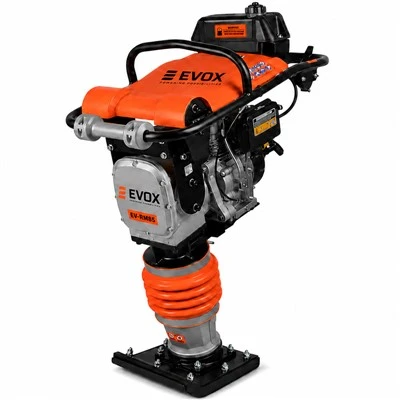
If you’re in the market for a diesel slurry pump, or you have a pump that’s underperforming and you think it’s a power sizing issue, reach out. We don’t do one-size-fits-all here—we’ll walk through your project, answer all your questions, and make sure you get a pump that’s powerful enough to get the job done, but not so powerful that you’re wasting fuel or wearing out parts prematurely. Don’t let a bad power calculation cost you money—get in touch with us today to talk through your requirements.
Light Construction Machinery References
- Karassik, I. J., McGuire, G. R., & Messina, J. P. (2007). Pump Handbook (4th ed.). McGraw-Hill Education.
- Bloch, H. P., & Budenis, R. (2010. Diesel Engine Performance and Application. CRC Press.
- American National Standards Institute. (2015). ANSI/HI 9.8-2015: Rotodynamic Pumps for Pump Intensity and Abrasive Slurry Handling. Hydraulic Institute.
- Gill, A., & Mathur, S. (2018). Slurry Pumping Technology: Principles and Practice. Elsevier.
Evoxpower Technology
Evoxpower Technology is one of the most professional diesel slurry pump manufacturers and suppliers in China, featured by quality products and good service. Please rest assured to buy the newest diesel slurry pump in stock here and get pricelist from our factory. Contact us for customized service and OEM service.
Address: 11 Fortune Avenue, Yubei District, Chongqing, China
E-mail: stephen@allrightpower.com
WebSite: https://www.evoxpower.com/
