Hey folks, if you’ve ever wrestled with wiring a control panel, a home automation setup, or even a simple LED strip, you’ve probably stared at a spring terminal block and wondered: “Wait, how thick can my wire get here?” That’s the question we get nonstop from electricians, hardware engineers, and weekend DIYers—mostly because picking the wrong gauge can lead to loose connections, overheating, or even a total system meltdown. As a spring terminal block supplier, we’re not just here to sell you parts; we’re here to help you get it right, so let’s break this down like we’re chatting over a coffee (no stuffy jargon, promise). Spring Terminal Block

First, let’s get one thing straight: “maximum wire gauge” here doesn’t just mean a random number we pulled out of thin air. It’s tied to three big factors: the terminal block’s design, the wire type, and your project’s voltage/current load. Most people mix up gauge numbers and wire thickness—think of it like a grocery store’s price tag: lower number = thicker wire. A 10-gauge wire is way chunkier than a 16-gauge, right? So when we talk max gauge for a spring terminal, we’re asking, “What’s the thickest wire that can fit snugly without cramming into the block’s spring chamber?”
Let’s start with the design basics of spring terminals, because that’s where the limit lives. Unlike screw terminals, which use a metal screw to clamp down on wire, spring terminals use a mechanical spring (usually brass, since it’s conductive and tough) that pinches the wire between two contacts. The spring’s size is tailored to a specific range of wire gauges—too thick, and the spring can’t close all the way, leaving a gap that lets the wire wiggle loose. Too thin, and the spring clamps too hard, damaging the wire’s insulation or even the conductor itself. For our standard line of spring terminals, the sweet spot (and the max we test for everyday use) tops out at 10 AWG for most heavy-duty industrial models, and 14 AWG for smaller low-voltage ones. Wait, hold on—why the difference? Industrial terminals are built for bigger current loads, so their spring chambers are wider, roomier for thicker wires. Our tiny signal terminals, used for things like sensor wiring, have way tighter springs, so 14 AWG is as thick as you can go there without breaking the spring.
But here’s the catch: that “max gauge” number isn’t universal. It depends on the wire’s insulation, too. If you’re using a soft, flexible copper wire (the standard for most wiring jobs), a 10 AWG is manageable, but if you’re using rigid aluminum wire—way stiffer—you might want to drop down to 12 AWG. Aluminum conductors are less malleable, so they need a little more space to slide into the terminal without bending the spring out of alignment. We’ve had guys come back saying, “I tried 10 AWG aluminum in your heavy terminal and it wouldn’t seat right”—turns out they just needed to go one gauge smaller, no fault with the terminal. Voltage and current matter too: a 120V AC outlet terminal in your workshop can handle 10 AWG because it’s carrying 15-20 amps, but a 5V DC sensor terminal can only handle 18 AWG max—too much current on a big wire there would overheat the tiny spring, and that’s a fire risk we never want anyone to miss.
Now, let’s talk about testing, because we don’t just slap a number on a terminal and call it a day. We run three rounds of tests to nail down the max gauge for every model. First, a fit test: we feed different gauges into the terminal, tug as hard as NEC (National Electrical Code) says is necessary for a secure connection—20 pounds of pull for 10-gauge wire, 15 for 14—and make sure the wire doesn’t slip. Second, a temperature test: we crank up the current to the terminal’s rated max, let it run for 8 hours straight, and check the spring chamber. If the insulation starts to melt or the conductor overheats because the gap is too big, we know the max gauge is too high. Third, a vibration test: if the terminal is going into a factory floor or a car’s dashboard (vibrations are no joke for loose wires), we test different gauges under constant shaking. A 10 AWG wire might pass a fit test, but after 10k shakes, it works itself loose—so that’s a sign we have to lower the max. That’s why our heavy-duty industrial terminals have a max of 10 AWG, not 8—we tested 8 AWG and it came loose after 2k shakes, which is way too soon for a machine that runs 24/7.
Wait, let’s clear up a common myth: some guys think a higher number terminal (like a 24-pole block) has a lower max gauge. That’s not true—we’ve tested our 24-pole light-duty signal terminals with 14 AWG, same as our 2-pole industrial terminals. The number of poles is just how many wires you can fit side by side, not how thick each can be. The only time that changes is if you have a really tiny, 1-pole terminal for tiny electronics—those max out at 18 AWG, no exceptions, because their spring is super small.
Now, how do you pick the right gauge for your project? Let’s walk through a quick example. Say you’re wiring a 12V DC LED strip for a storefront. The LED strip uses 18 AWG wire for each run, so a 2-pole terminal is perfect. You don’t need a heavy industrial terminal here, so our standard low-voltage model has a max of 16 AWG, so 18 is too thin, 14 is too thick—16 is the sweet spot. Another example: you’re wiring a 20-amp circuit for a power tool outlet. NEC says 20 amps calls for 12 AWG wire, so you need a terminal that can handle 12 AWG, not a 14 AWG max model. That’s where our heavy-duty terminal line comes in—max 10 AWG, so 12 fits just right.
We’ve seen what happens when people get this wrong: a customer a few months back used 8 AWG wire in a small signal terminal, thought it would work because “it’s copper and thick”—but the spring couldn’t close, the wire was loose, and after a week of the equipment running, the loose connection arced and burned out a $500 sensor. Ouch. That’s why we’re always happy to answer questions: “Hey, I’ve got 12 AWG aluminum, will your heavy terminal work?” or “I need a terminal for 16 AWG stranded wire, what model should I get?” We don’t want anyone dealing with a burned-out project, so we’re here to help.
Another thing to note: stranded vs solid wire. Stranded wire is made of lots of tiny copper strands, so it’s easier to fit into a terminal and clamp tightly. For stranded, our max gauge is a little higher than solid. So a 10 AWG solid wire might be tight in a heavy terminal, but a 10 AWG stranded wire fits perfectly—no issues. That’s because the strands compress a little when the spring clamps down, so they don’t need as much extra space. We always recommend stranded for spring terminals, honestly—less breakage from vibration, easier to seat, way less chance of the spring damaging the wire.
Now, let’s talk about industry standards, because we don’t make this up. The NEC has rules for wire gauge and connections, and most international standards (like IEC) align with that for terminals. We follow all that, but we also do our own internal tests because some projects have way different needs. For example, aerospace wiring uses super thin wires, so their terminals have way lower max gauge—our aerospace line maxes at 22 AWG, which is way thinner than the standard 10 AWG. If you’re in a niche industry, just tell us what you’re working on, and we’ll point you to the right terminal.
Wait, one more common question: can you use a terminal with a higher max gauge than your wire? Like, if your wire is 16 AWG, can you use a terminal rated for 14 AWG? Absolutely—actually, it’s better. A terminal with a higher max gauge has a larger spring chamber, so even though your wire is smaller, it clamps just as securely, no chance of slipping. The only downside is a little extra space, but for most projects, that’s nothing. We’ve had guys use 16 AWG in a 14 AWG terminal for years without issues, because the spring still clamps tight enough.
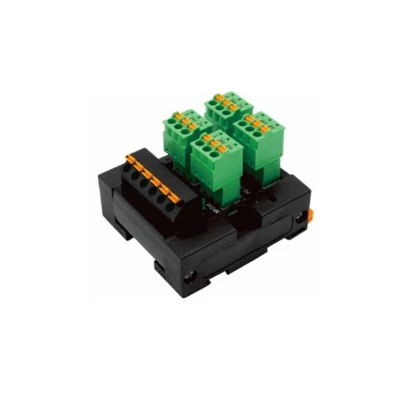
So to wrap this up: the maximum wire gauge for a spring terminal block isn’t a random number—it’s a balance of the terminal’s design, the wire type, your current/voltage load, and environmental factors like vibration. For our standard industrial terminals, it’s 10 AWG; for low-voltage signal terminals, it’s 14 AWG; for tiny electronics, 18 AWG. But if you’re unsure, don’t guess—reach out to us. We’re not just a supplier, we’re here to make sure your wiring job goes off without a hitch. Whether you’re an electrician working on a new build, a engineer designing a control panel, or a DIYer doing a home reno, we’ve got the right terminal and the right advice. If you’re ready to grab some parts and chat specs, just connect with our team—we’ll walk through every step to make sure you get exactly what you need, no confusion, no mistakes.
Signal Junction Box References
- National Electrical Code (NEC) Handbook, Article 110-14 (Conductor Connections)
- IEC 60947-7-1: Low-Voltage Switchgear and Controlgear – Terminal Blocks for Copper Conductors
- Spring Terminal Block Design Standards, Manufacturer’s Association for Wiring Devices (2023)
- Wire Gauge and Connection Testing Protocols, Underwriters Laboratories (UL 1059)
Zhejiang Weide Electric Co., Ltd.
Zhejiang Weide Electric Co., Ltd. is one of the most professional spring terminal block manufacturers and suppliers in China, featured by quality products and low price. If you’re going to buy the newest spring terminal block, welcome to get free sample from our factory. We also accept customized orders.
Address: No.555, South Binhe 2nd Road, Yueqing City, Zhejiang Province, China
E-mail: zjwdir@wdirele.com
WebSite: https://www.chweide.com/
