If you’ve spent any time managing or troubleshooting modern network infrastructure, you know how often performance issues strike out of nowhere. A user might complain about sudden lag during peak hours, a critical application might drop packets right before a demo, or a new feature rollout could cause unexpected latency across multiple sites. For years, network teams relied on manual testing: running ping tests, copying trace routes, and comparing throughput metrics across dozens of devices, a process that could take hours, even days, and still miss subtle patterns that only emerge over time. As an AI networking supplier, I’ve watched our clients move away from these outdated methods and toward AI-assisted testing—and the difference it makes is transformative. Today, I want to break down exactly how AI turns network performance testing from a reactive, error-prone chore into a proactive, precise practice that keeps infrastructure running smoothly. AI Networking
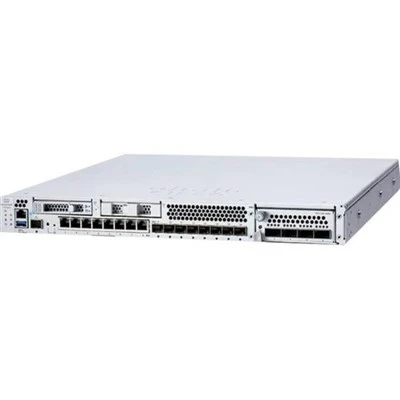
First, let’s ground this in what network performance testing actually entails for most enterprises and service providers. At its core, it’s the process of measuring metrics like latency, packet loss, jitter, throughput, and resource utilization to confirm that a network can handle its intended load, spot bottlenecks, and validate that changes (new hardware, software updates, or traffic routing tweaks) don’t break things. The old approach had clear limits: manual testing only captured snapshots of a network at a single moment, not its behavior over hours or days. It struggled with dynamic traffic—like the sudden spike in video conferencing traffic during a company all-hands, or a DDoS attack that floods the network with random packets. It also couldn’t connect the dots between seemingly unrelated events, like a server upgrade causing congestion in a distant router, until a user reported a problem weeks later.
AI solves these gaps in three key, practical ways that I’ve seen work firsthand with clients across industries. The first is continuous, intelligent test generation—AI doesn’t run the same scripted tests over and over; it adapts tests to the network’s real-time behavior. Let me explain: a traditional automated test might run a throughput check every 15 minutes, regardless of whether the network is in a lull or a peak. AI, by contrast, ingests raw telemetry from all over the network—router logs, switch performance data, application traffic patterns, even calendar data that flags when teams are working from home or hosting large events. It uses unsupervised machine learning models to establish a “normal” baseline of network behavior, so it can spot when a test’s parameters are misaligned. For example, if a client’s baseline shows that weekday afternoons have 3x more traffic than early mornings, AI will automatically scale test load to match that peak traffic, instead of running a low-load test that would never reveal whether the network can handle demand during crunch time. I’ve had a retail client tell me that before using our AI tools, their holiday weekend testing would miss that their point-of-sale network could only handle 80% of expected traffic because their manual tests used weekday load levels. Now, AI adjusts tests in real time, and they caught a routing bottleneck that would have caused thousands of dollars in lost sales.
The second way AI elevates network testing is predictive bottleneck detection. Even when teams run tests, they often can’t figure out why a bottleneck exists—was it a bad router firmware update? A misconfigured firewall rule? A temporary traffic spike? AI cuts through this noise by analyzing terabytes of historical and real-time data to pinpoint the root cause, not just the symptom. Let’s take a recent client story: a healthcare provider was seeing intermittent jitter in their telemedicine traffic, which put patient video consultations at risk. Their team ran standard tests and saw high latency between two regional sites, but couldn’t tell if it was the core network or an edge access point. Our AI tool pulled in three months of telemetry, plus data from the provider’s electronic health record system (which shows when telemedicine traffic peaks) and their cloud storage logs (which show when backup jobs run). Within an hour, it flagged that a misconfigured quality of service (QoS) rule was deprioritizing telemedicine traffic during 2 a.m. backup windows—a problem that no manual test would have caught, because teams never ran tests at 2 a.m. That’s the power here: AI correlates hundreds of data points that humans can’t, and it can predict bottlenecks before they cause outages. It can also simulate how a proposed change will affect the network. If a client wants to add a new data center or roll out a new AI application that will double their traffic, AI can run a “what-if” test to show exactly where bottlenecks will form, so teams can adjust routing or add capacity long before the change goes live.
Third, AI makes network testing scalable for the complex, multi-cloud environments that are standard today. Most networks aren’t just a single set of routers in a data center—they’re a mix of on-prem hardware, multiple cloud providers, remote access for thousands of employees, and IoT devices that generate constant traffic. Testing these environments manually is impossible; you can’t have a team member physically run tests in 10 different cloud regions at 2 a.m. AI automates end-to-end testing across all these environments, and it can unify test results so teams don’t have to parse separate reports from each cloud provider or on-prem network. For example, a financial services client with infrastructure across three clouds and 5,000 remote workers told me that before AI, testing their remote access would take a full day, with separate reports from each cloud and their VPN provider. Now, AI runs the same test across all environments, aggregates latency and packet loss data, and flags that a specific cloud’s egress points are causing 40% of the remote access latency—something they would have spent weeks troubleshooting otherwise. AI also adapts to the unique quirks of each environment: if one cloud provider has a history of latency during third-quarter revenue reporting, AI will adjust its test schedule to account for that, instead of running a generic test that doesn’t reflect real-world conditions.
Of course, some people ask: isn’t AI just another black box that will miss things humans catch? That’s a valid concern, but in my experience, AI for network testing is only as good as the data it’s trained on—and when it’s built with real network experts input, it’s not a replacement for humans, it’s a tool that amplifies their work. Our AI tools are designed so network teams can see exactly how the model arrived at a conclusion: if it flags a bottleneck, it will show the QoS rule, the router log entry, and the time of day that confirmed the pattern. We don’t hide the logic; we make it transparent, so engineers can trust the AI’s insights and act on them. For example, if an engineer is troubleshooting a slow application, they can pull up the AI’s test report, which links the latency spike to a specific firmware update that was rolled out the same day, instead of sifting through thousands of log entries manually.
Another common misconception is that AI-only testing is enough. But the best approach is a hybrid: AI handles the repetitive, large-scale parts of testing, and humans handle the context-specific, high-stakes decisions. AI can tell you that a test shows 15% higher latency between two sites, but a human knows that those sites are in a region with frequent bad weather that affects fiber optic cables, so they can prioritize fixing that bottleneck over a less critical one. That’s why our tools are built to work alongside existing network teams, not replace them—we’ve seen the most success when AI runs 24/7 continuous testing, and engineers use its insights to focus on the work that requires human judgment.

Let’s circle back to why this matters for businesses. Network downtime or poor performance doesn’t just cause inconvenience—it hits the bottom line. A Gartner report from a few years back found that the average cost of network downtime is $5,600 per minute, which adds up to over $300,000 per hour for mid-sized enterprises. AI-assisted testing reduces that risk by catching issues before they become outages, and it cuts down on the time teams spend troubleshooting, so they can focus on projects that drive business value. For our clients, that means less overtime for network engineers, fewer lost sales from e-commerce site outages, and better user satisfaction for both employees and customers.
Wireless APs for Juniper Now, if you’re still relying on manual or static automated testing, you’re probably dealing with hidden bottlenecks, wasted engineering hours, and unexpected outages that could have been avoided. Our AI networking tools are built to integrate with your existing infrastructure, no matter how complex it is, and they’re tailored to your unique network needs—whether you’re a retail brand, a healthcare provider, a financial service, or a tech company. If you’re ready to turn your network performance testing from a reactive chore into a proactive advantage, we’d love to discuss how our AI solutions can work for you. Reach out to our team to schedule a consultation, and we can walk through your specific network challenges and show you exactly how AI can make a difference.
References
- Group, G. (2023). “The Cost of Network Downtime Report.” Gartner Inc.
- Zhang, L., et al. (2022). “Unsupervised Machine Learning for Network Performance Baseline Establishment.” IEEE Transactions on Network and Service Management.
- Rajagopal, S., et al. (2021). “AI-Driven Predictive Bottleneck Detection in Multi-Cloud Networks.” Proceedings of the Annual Conference on Computer Communications.
- Cisco Systems. (2023). “Global Cloud Networking Trends Report.” Cisco Publicly Available Whitepaper.
AITI Tech Limited
AITI Tech Limited is one of the most professional ai networking suppliers for over 20 years, featured by quality products and good price. Welcome to buy bulk high-grade ai networking in stock here from our company. If you have any enquiry about pricelist, please feel free to email us.
Address: 6F, Haogong Building, Yannan Road, Futian District, Shenzhen, China
E-mail: require@hkaiti.com
WebSite: https://www.hkaiti.com/
