When it comes to roll forming machines, one of the most frequently asked questions by our customers is, "What is the maximum thickness of the material that a roll forming machine can process?" As a reputable roll forming machine supplier, I’m here to shed light on this crucial topic. Roll Forming Machine

Understanding Roll Forming and Material Thickness
Roll forming is a continuous bending operation in which a long strip of metal, typically coiled steel, is passed through consecutive sets of rolls, each performing an incremental part of the bend, until the desired cross – section profile is obtained. This process is highly efficient for producing high – volume, long lengths of formed metal products with consistent quality.
The maximum material thickness that a roll forming machine can handle is not a one – size – fits – all specification. It depends on a variety of factors that are intricately related to the machine’s design, capabilities, and the nature of the material being processed.
Factors Affecting the Maximum Material Thickness
Machine Design and Construction
The structural integrity of the roll forming machine is of utmost importance. Machines with a robust frame and sturdy construction can withstand the higher forces required to bend thicker materials. For example, a heavy – duty roll forming machine with a thick steel frame and well – supported roll stands is better equipped to handle thicker materials compared to a lighter – duty machine.
The quality and design of the rolls are also critical. Rolls need to be made of hard – wearing materials such as high – grade tool steel to resist wear and deformation when processing thick materials. The shape and size of the rolls, as well as their spacing, are carefully engineered to ensure proper bending and forming of the material at different thicknesses.
Power and Drive System
The power of the motor and the efficiency of the drive system play a significant role in determining the maximum material thickness. A more powerful motor can provide the necessary torque to drive the material through the rolls, especially when dealing with thick and rigid materials. For instance, a roll forming machine with a high – horsepower electric motor is more likely to handle thicker gauges than a machine with a smaller motor.
The type of drive system, whether it’s a direct – drive or a gear – driven system, also affects the machine’s ability to process thick materials. A well – designed drive system can transfer power smoothly and efficiently, ensuring consistent forming of the material.
Material Properties
Different materials have different mechanical properties, which directly impact the maximum thickness that can be processed. For example, steel is a commonly used material in roll forming, but its composition can vary widely. High – strength steels, such as advanced high – strength steels (AHSS) or ultra – high – strength steels (UHSS), are more difficult to form than mild steels due to their higher yield strength and lower ductility.
Aluminum, on the other hand, is generally more ductile than steel, which means that a roll forming machine may be able to process thicker aluminum sheets compared to the same machine’s capacity for steel. The surface finish of the material can also affect the forming process. A smooth – surfaced material may require less force to form than a material with a rough or uneven surface.
Typical Maximum Thickness Ranges
In general, for standard roll forming machines used in the industry, the maximum material thickness can range from 0.5 mm to 6 mm for common materials like steel and aluminum. However, these are just broad ranges, and the actual maximum thickness can be higher or lower depending on the factors mentioned above.
For light – duty roll forming machines, often used for applications such as making small – scale metal profiles or decorative elements, the maximum thickness may be limited to around 0.5 mm to 2 mm. These machines are designed for lower – volume production and are more suitable for thinner materials that require less force to form.
Medium – duty roll forming machines, which are commonly used in a wide range of industries for producing structural components, can typically handle materials with a thickness of 2 mm to 4 mm. These machines offer a good balance between production speed and the ability to process moderately thick materials.
Heavy – duty roll forming machines, designed for large – scale production of thick – walled structural components, can process materials up to 6 mm or even thicker in some cases. These machines are built with heavy – duty frames, powerful motors, and high – precision rolls to handle the demanding requirements of forming thick materials.
Case Studies
Let’s take a look at a few real – world examples to illustrate the relationship between roll forming machines and material thickness.
A construction company was looking to produce steel purlins for a large – scale building project. They required a roll forming machine that could handle 3 mm thick high – strength steel. Our company provided them with a medium – duty roll forming machine equipped with a high – torque motor and specially designed rolls. The machine was able to form the steel purlins accurately and efficiently, meeting the project’s requirements.
Another customer in the automotive industry needed to produce aluminum brackets. The brackets were made from 4 mm thick aluminum sheets. We recommended a heavy – duty roll forming machine with a precision – engineered drive system. The machine was able to process the thick aluminum sheets without any issues, resulting in high – quality brackets that met the strict automotive industry standards.
Importance of Choosing the Right Machine for Material Thickness
Selecting the appropriate roll forming machine based on the maximum material thickness is crucial for several reasons. Firstly, using a machine that is not capable of handling the intended material thickness can lead to poor quality products. The material may not be formed correctly, resulting in uneven bends, cracks, or other defects.
Secondly, overloading a machine by trying to process materials that are too thick for its capacity can cause damage to the machine. This can lead to costly repairs, downtime, and a decrease in overall productivity.
On the other hand, choosing a machine with a much higher capacity than necessary can be a waste of resources. It may require more energy to operate and may be more expensive to purchase and maintain.
Our Company’s Expertise in Meeting Different Thickness Requirements
As a roll forming machine supplier, we have extensive experience in providing machines that can handle a wide range of material thicknesses. Our team of engineers and technicians works closely with customers to understand their specific requirements, including the type of material, the desired thickness, and the production volume.
We offer a comprehensive range of roll forming machines, from light – duty to heavy – duty models, each designed to meet different industry needs. Our machines are built with the latest technology and high – quality components to ensure reliable performance and long – term durability.
We also provide customization services. If a customer has unique requirements for processing a specific material at a particular thickness, we can modify our standard machines or develop a custom – designed roll forming machine to meet their exact needs.
Conclusion
The maximum thickness of the material that a roll forming machine can process is a complex topic that depends on multiple factors, including machine design, power, and material properties. Understanding these factors is essential for selecting the right roll forming machine for your specific application.
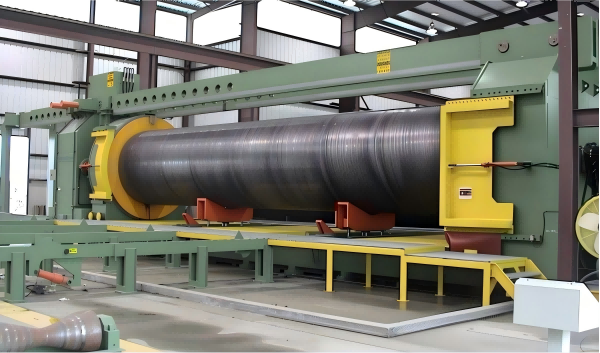
At our company, we are committed to providing high – quality roll forming machines that can handle various material thicknesses. Whether you are a small manufacturer looking for a light – duty machine or a large – scale industrial company in need of a heavy – duty solution, we have the expertise and the products to meet your requirements.
Roll Forming Machine If you are interested in learning more about our roll forming machines and how they can meet your material thickness requirements, we encourage you to contact us. Our sales team is ready to discuss your project in detail and provide you with the best possible solution. Let’s work together to achieve your production goals.
References
- ASM Handbook, Volume 14A: Metalworking: Bulk Forming. ASM International.
- Roll Forming Technology: Principles and Practice. By Peter J. Ulintz.
Tianjin Binhai Yashanway Import and Export Co., Ltd.
Tianjin Binhai Yashanway Import and Export Co., Ltd. is one of the most reliable roll forming machine manufacturers and suppliers in China, also supports customized service with low price. Welcome to wholesale bulk roll forming machine made in China here from our factory. Contact us for quotation.
Address: B-508, Xiangnian Plaza, Dongjiang Road, Hexi District, Tianjin, China
E-mail: crystal@yashanway.com
WebSite: https://www.yashanway.com/
