If you’ve ever held a prescription, a vaccine vial, or a sterile surgical implant, there’s a good chance specialty gases were part of making it—long before it reached a pharmacy shelf or a hospital storage closet. As a specialty gases supplier, I get asked this question all the time by pharma process teams, lab managers, and quality assurance leads who aren’t gas experts: what exactly do these tailored, high-purity gases do in an industry where even a single impurity can derail a drug launch, cause a batch recall, or compromise patient safety? The answer isn’t just “they’re used somewhere in manufacturing”—it’s a chain of precise, non-negotiable steps that rely on gases we formulate, test, and deliver to match the exact tight specifications pharma regulators like the FDA and EMA demand. Pecialty Gases
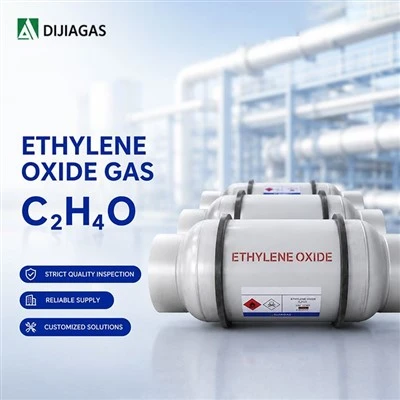
Let’s start with the part most people don’t think about: sterile drug manufacturing, especially for injectables. Insulin, monoclonal antibodies (mAbs), and many life-saving antibiotics aren’t made in open factories—they’re produced in closed, hermetically sealed bioreactors that need to maintain consistent, contamination-free conditions throughout the entire growth phase of living cells. Here’s where specialty gases come in: during cell culture, we supply blends that balance 95% filtered medical-grade air, 4% carbon dioxide, and 1% oxygen, calibrated to within 0.1% accuracy. Too little oxygen and cells suffocate; too much and oxidative stress triggers mutations that would make the final drug unsafe to administer. Even the nitrogen we deliver to these reactors isn’t ordinary nitrogen. It’s ultra-high-purity (UHP) nitrogen, with less than 0.1 parts per million (ppm) of moisture and oxygen, used to purge headspace in bioreactors and transfer lines. This prevents aerobic microbes from growing where they shouldn’t, a critical guardrail for preventing batch contamination. Last year, we supported a mAb manufacturer mid-pandemic when their existing gas provider couldn’t supply these calibrated blends quickly enough—we adjusted our on-site production skid to meet their 72-hour delivery window, and their batch remained on schedule, avoiding a costly delay that would have delayed clinical trials for a myeloma treatment.
Next up: freeze-drying, or lyophilization, a process used for drugs that degrade when exposed to heat. Many vaccines, allergy treatments, and some antibiotics are lyophilized because liquid formulations can only be stored for weeks, while freeze-dried versions last for years at room temperature. Here’s how specialty gases tie into this: after a drug is filled into vials, we use high-purity nitrogen or argon to replace the air in the vial’s headspace before crimping the stopper. Why? Air has oxygen and moisture that would break down the drug’s active pharmaceutical ingredient (API) over time. Nitrogen is the go-to for most lyophilized drugs because it’s inert and affordable, but some sensitive formulations—like certain peptide therapies—require argon, which is denser than nitrogen and creates a more stable barrier against moisture ingress. We recently audited a lyophilization line for a small biotech and found they were using industrial-grade nitrogen for a high-stakes cancer drug, which had 2 ppm of moisture; switching to our UHP nitrogen cut moisture levels to 0.05 ppm, doubling the drug’s shelf-life and eliminating the need for cold-chain storage, which was a game-changer for their remote clinical trial sites.
Then there’s the critical step of water purification, the backbone of all pharma manufacturing. Almost every drug is formulated with water that’s been distilled, deionized, and treated to remove all organic and inorganic contaminants—even tiny amounts of metal or bacteria can ruin a batch. Many of the systems that treat this water use specialty gases as part of the process: ozone, for example, is a strong oxidizer that’s generated on-site (to avoid transporting high-pressure gas) by mixing oxygen with our UHP oxygen. Ozone kills bacteria, viruses, and organic compounds in water 50 times faster than chlorine, and it leaves no residue—since it breaks down into oxygen within hours. We also supply hydrogen for polishing steps in some systems: small doses of hydrogen react with residual ozone to convert it back to oxygen, ensuring the final water meets USP Purified Water or Water for Injection (WFI) standards. I remember working with a generic drug maker a few years back who was struggling to pass WFI testing because their chlorine-based treatment left residual byproducts; switching to our on-site ozone generator using our UHP oxygen fixed their problem overnight, and they haven’t had a water quality failure since.
Lab testing and analytical work for pharma also rely heavily on specialty gases, a part of the process that’s often overlooked in manufacturing but is just as important. Gas chromatography (GC) and mass spectrometry (MS) are the gold standard for testing APIs, detecting impurities, and verifying the identity of finished drugs. These instruments need carrier gases that are 99.999% pure or higher—any impurity in the carrier gas will show up as a false peak, leading to incorrect test results. We supply high-purity helium for most GC-MS work, but as helium costs rise, many labs are switching to our ultra-pure hydrogen, which is cheaper and works for most applications. We also supply calibration gas mixtures for labs—think blends of known concentrations of methane, carbon monoxide, and other gases that labs use to verify their instruments are accurate. Last year, a contract research organization (CRO) reached out because they needed a custom calibration mix for testing cannabis-derived pharmaceutical products; no standard mix worked for their specific cannabinoid, so we formulated a custom blend with precise concentrations of the cannabinoid and other trace gases, tailored to their GC-MS setup.
Another underdiscussed use is in packaging and sealing of finished drugs. Blister packs for oral tablets, for example, often use modified atmosphere packaging (MAP), where a mix of gases replaces air to extend shelf life and maintain potency. For blood thinners, which can oxidize if exposed to air, we supply a 90% nitrogen, 10% carbon dioxide blend that keeps tablets stable for 5 years instead of the standard 2. For flexible packaging for inhalers, which deliver asthma medications directly to the lungs, we use nitrogen to purge packaging lines during sealing to prevent contamination from airborne microbes. Even sterile plastic components, like syringes or vial stoppers, are packaged in nitrogen-filled bags to keep them sterile until they reach the assembly line for pre-filled syringes. I once visited a medical device company that made pre-filled insulin syringes and found they were using filtered air instead of nitrogen in their packaging; switching to our UHP nitrogen reduced their sterility failure rate from 0.2% to 0.01%, a huge win for patient safety and batch yield.
Let’s talk about the unique demands that come with being a specialty gases supplier to pharma, because it’s not the same as supplying gases to food or electronics manufacturing. First, traceability is non-negotiable. Every cylinder of gas we deliver has a batch number, a Certificate of Analysis (COA) that lists every impurity down to the ppb level, and a log of where it was sourced and how it was purified. Regulators like FDA require this documentation to be part of every batch record for drugs, so we don’t just ship gas—we provide full traceability that our pharma customers can upload directly to their quality systems. Second, reliability is critical. A drug batch can be worth millions of dollars, and shutting down a line because of a gas shortage can cost a company hundreds of thousands of dollars per hour. That’s why we maintain 24/7 on-call support, and for high-volume customers, we keep on-site storage tanks and delivery skids so they never run out—even during supply chain disruptions, like the 2021 global nitrogen shortage that forced many manufacturers to pause production. Third, customization is key. No two drug processes are the same, so we spend time working with each customer to understand their exact needs: what impurity limits their process can tolerate, what their batch size is, what their delivery timelines are. For example, a small biotech might need a small, on-demand cylinder for a clinical trial batch, while a large generic drug maker might need a 10,000-gallon bulk tank delivered weekly. We have both, and we tailor our approach to their scale, not the other way around.
As someone who’s been in this specialty gases space for over 15 years, I’ve seen firsthand how a single gas decision can make or break a drug. I’ve stood in a biotech’s manufacturing facility at 2 a.m. during a critical cell culture run, holding a COA to confirm the nitrogen blend was within spec, because a 0.5% deviation could have ruined a $2 million batch. I’ve worked with regulators during an audit, walking them through our gas purification process and traceability logs, to confirm that our gases meet all current good manufacturing practice (cGMP) standards. I’ve helped small startups scale up from a lab with 10-liter bioreactors to a commercial facility with 10,000-liter reactors, adjusting our gas supplies every step of the way to match their growing needs.
At the end of the day, specialty gases in pharma aren’t just a supporting ingredient—they’re a core component that enables every step of drug development and production. They keep cell cultures growing correctly, extend the shelf life of life-saving vaccines, ensure water is pure enough to make drugs, let labs test for impurities accurately, and keep finished drugs sterile until they reach patients. If you’re part of a pharma team working on process optimization, troubleshooting a quality issue, or scaling a new drug, we’d be happy to discuss your specific needs and how our specialty gases can support your work.
Please reach out to our team to arrange a consultation tailored to your pharmaceutical manufacturing or research needs.
Specialty Gases References
- United States Pharmacopeia (USP). < USP 1231 > Water for Pharmaceutical Purposes. 2023.
- European Directorate for the Quality of Medicines & HealthCare (EDQM). Chapter 5.1.4: Gases for Pharmaceutical Use. 2022.
- International Society of Pharmaceutical Engineering (ISPE). Risk Assessment in Manufacturing of Biopharmaceuticals. 2021.
- Pikal MJ. Lyophilization of Biopharmaceuticals: Principles and Practice. American Association of Pharmaceutical Scientists, 2004.
- Zhang L et al. Specialty Gas Applications in Pharmaceutical Manufacturing and Analytical Testing. Journal of Pharmaceutical Sciences, vol. 110, no. 6, 2021, pp. 2045–2058.
Zibo Dijia Special Gas Co., Ltd.
Zibo Dijia Special Gas Co., Ltd. is one of the most professional pecialty gases manufacturers and suppliers in China. With a professional production team, we are able to provide high quality customized service with competitive price. Please feel free to buy discount pecialty gases in stock here from our factory. Welcome to contact us for pricelist.
Address: No.2158 Xinhua Road, Linzi District, Zibo City, Shandong Province, China
E-mail: ruth@dijiagases.com
WebSite: https://www.dijiachem.com/
