Hey everyone, Isolation Chip

If you’ve ever worked with isolation chips—you know the struggle of finding the right materials. As someone who’s been in the game as an isolation chip supplier for a few years now, I get it: picking a material isn’t just about “it works” — it’s about how it plays with biological samples, how it holds up in lab conditions, and how easy it is to scale when you’re getting orders from researchers around the world.
First off, let’s break down what “biocompatible” even means here. For isolation chips, it’s not just “doesn’t poison cells” — it’s about avoiding things that mess with your assay. Like, if the material leaches chemicals that make your protein stick wrong, or triggers cells to act weird before you’re ready, that’s a non-starter. And let’s be real: no one wants to spend weeks optimizing a chip only to get garbage data because of a material choice.
Let’s start with the big one people ask about all the time: PDMS. Polydimethylsiloxane, or PDMS as we call it around here. It’s been a go-to for microfluidic chips for decades, and for good reason. It’s cheap, easy to mold with soft lithography — perfect for prototyping. But here’s the catch: it’s not always biocompatible. Wait, why? PDMS is super porous, so small molecules like proteins, even some drugs, can diffuse right through it. And if you’re working with live cells? PDMS absorbs small hydrophobic molecules, which can mess with cell signaling or drug studies. That’s why we modified our PDMS chips a while back — we coated the surface with a thin layer of parylene to seal those pores. Suddenly, no more leaching, no more unwanted absorption. A lot of our regular customers — cell biologists doing single-cell assays — swear by it now for that reason. But it’s not for every use case. If you’re doing long-term cell culture (like days, not hours), even coated PDMS can have issues with surface fouling. So we steer folks that way for short assays, not long ones.
Next up: Cyclic Olefin Polymer, or COP. This is a workhorse for us when customers need something more durable. COP is a thermoplastic, so it’s injection-moldable — great for high-volume production, which is why we can get bulk orders out fast. It’s super biocompatible, too. It doesn’t leach anything, and it’s not porous, so no molecule absorption headaches. We use it a lot for immunoassays where you’re capturing specific proteins — protein adhesion is low, so your target doesn’t get stuck on the chip walls before you can measure it. Wait, but what’s the downside? COP’s not as easy to prototype with as PDMS. You can’t just make a mold in an hour; injection molding takes tooling, which costs a bit more upfront. But for final products, it’s worth it. A lot of our clinical research partners use COP chips because they’re consistent batch to batch — critical for reproducible data in studies that’ll be published or lead to clinical trials.
Then there’s glass. Yeah, the old-school pick. Glass is incredibly biocompatible. No leaching, super inert, doesn’t mess with molecules. But it’s fragile, hard to pattern with small features, and not great for disposable chips (nobody wants to clean a glass chip for every assay these days). Wait, but we do use glass for specialized things — like if a customer’s doing fluorescence assays, because glass has super low autofluorescence. If you’re measuring faint signals from a fluorescent protein, PDMS or COP can have background glow that muddles things, but glass is clear as day. So we offer glass chips as a custom option for those niche use cases. The only catch: since glass is fragile, we make sure to package them extra carefully when we ship, so they don’t break before you get to use ’em.
What about something newer? Thermosets like SU-8? Wait, SU-8 is a photoresist, right? It’s great for making thick features, like for cell trapping or droplet generation. But here’s the thing: unpolymerized SU-8 can be toxic to cells. So we fully cure our SU-8 chips — like, so thoroughly that there’s no leftover monomer left. Once that’s done, it’s actually pretty biocompatible. We use it for droplet microfluidic chips where you need strong, stable structures. But you have to make sure the curing step is on point — we had a customer once who tried a cheaper SU-8 chip from another supplier, and it had leftover monomer that killed their cells. Never again, they told us. That’s why we test every single batch for biocompatibility before it leaves our lab — no cutting corners here.
And let’s not forget about coatings. Sometimes the base material is fine, but you need an extra layer to make it work for your specific assay. Like, if you’re working with blood, plasma proteins (fibrinogen, albumin) tend to stick to surfaces and cause clotting or non-specific binding. So we offer a plasma treatment coating for our COP chips — it makes the surface hydrophilic, so blood doesn’t stick as much. For PDMS, we can do a polyvinyl alcohol (PVA) coating that seals the pores even better, which helps with long-term cell culture. Wait, but coatings can wear off. We’ve had customers use our PVA-coated PDMS chips for 3-day culture, and they work fine, but if you’re doing a week-long assay, you might need a different coating. That’s why we chat with every customer before they order — to make sure we’re matching the material and coating to their exact needs.
Now, let’s talk about when to pick what. If you’re a grad student prototyping a microfluidic chip for a quick single-cell assay, PDMS (coated) is your go-to — cheap, fast, easy to adjust. If you’re a research lab doing a clinical trial’s sample testing, COP is the way to go — consistent, no leaching, scalable. If you’re doing super sensitive fluorescence work, glass. If you’re making droplet chips, SU-8 (fully cured, obvi). We’ve had people ask us if there’s a “one-size-fits-all” material, and nope — it doesn’t exist. Every assay has its quirks, and that’s why we take the time to listen.
Wait, let’s throw in a real example. A few months back, a team at a university reached out to us because they were having issues with their isolation chips — their protein recovery was only 60% because the PDMS they were using was absorbing the target protein. We swapped them to our parylene-coated PDMS chips, and their recovery jumped to 95%. They told us that meant they could finally get publishable data, instead of wasting time on bad results. That’s the stuff that makes our job worth it — knowing we’re helping people avoid the headaches that come with bad material choices.
Another thing: sterilization. Isolation chips have to be sterile for most biological work, right? PDMS can be autoclaved, but wait — autoclaving PDMS makes it swell a little, which can mess up the microchannels. So we tell customers to use ethanol sterilization for PDMS, or ethylene oxide (EtO) if they need something more thorough. COP and glass? They can handle autoclaving no problem. That’s another detail we bring up with every order — because if you sterilize the wrong material, your chip might not work at all.
Oh, and let’s bust a myth: some people think biocompatible means “totally inert.” But that’s not always true. For example, some materials are slightly surface-reactive, but that can be a good thing if you’re trying to bind antibodies or other capture agents. The key is that the reactivity is predictable and doesn’t interfere with your assay. We test all our materials for both baseline biocompatibility (no toxicity, no leaching) and for assay-specific compatibility (protein binding, cell adhesion) — so you don’t have to guess.
At the end of the day, material choice is make-or-break for isolation chips. Too many suppliers just push whatever’s cheap, but we don’t do that. We’ve tested dozens of materials over the years, and we know which ones work for which applications. Whether you’re prototyping, scaling, or doing something niche, we can help you pick the right material — and adjust it with coatings if needed — so your isolation chips perform exactly how you need them to.
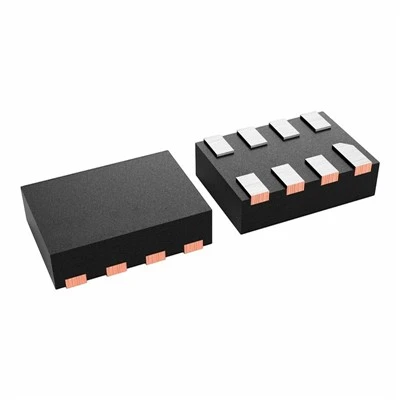
If you’re in the market for isolation chips, or you’re having trouble with bad material choices messing up your experiments, hit us up. We’d love to chat about your specific needs and help you get the right chips for your work. Don’t waste another week on assays that aren’t working — let’s find the solution together.
Clocks and Timing Chip References
- Qin, D., Xia, Y., & Whitesides, G. M. (2010). Soft lithography for micro- and nanoscale patterning. Nature Protocols, 5(3), 491–502.
- Berthier, E., Wikswo, J. P., & Sweedler, J. V. (2012). Polydimethylsiloxane (PDMS) as a material for microfluidic devices. Lab on a Chip, 12(10), 2050–2063.
- Hansen, C. L., Sommer, M., & Tenje, M. (2018). Cyclic olefin copolymers for microfluidic applications. Micromachines, 9(12), 645.
- del Campo, A., & Arzt, E. (2008). SU-8 photoresist for microelectromechanical systems: a review. Journal of Micromechanics and Microengineering, 18(11), 113001.
- Bhatia, S. N., & Ingber, D. E. (1997). Surface engineering of microfluidic devices for biological applications. Current Opinion in Biotechnology, 8(1), 138–145.
Hainan Huanyu Technology Co., Ltd.
As one of the most professional isolation chip manufacturers and suppliers in China, we’re featured by quality products and good service. Please rest assured to wholesale durable isolation chip in stock here from our factory. Customized orders are welcome.
Address: Jingrui Building, No. 18 Longkun North Road, Jinmao Street, Longhua District, Haikou City, Hainan Province
E-mail: Business-mall@hy-kj.ltd
WebSite: https://www.hykj-chip.com/
