If you’re deep in the automotive supply chain, odds are you’ve encountered R702 more times than you realize—even if you don’t know it by that exact code. As a supplier who’s worked with R702 for over a decade, I’ve watched this versatile material go from a little-known component additive to a behind-the-scenes workhorse that touches nearly every modern vehicle on the road today. Most people outside of engineering teams and parts manufacturers never stop to ask: what is R702 used for in automotive, and why does it matter so much? Let’s break this down, not with jargon that makes your eyes glaze over, but with the on-the-ground perspective of someone who ships R702 to factories that build cars, trucks, and electric vehicles (EVs) every day. R702
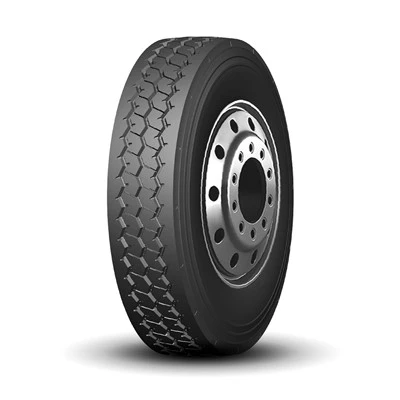
First, let’s get the basics out of the way: R702 is a high-purity polypropylene (PP) copolymer, modified with a small amount of ethylene to boost impact resistance, flexibility, and thermal stability. It’s not a metal, not a raw plastic in a basic form, but a grade engineered specifically for automotive applications. What sets it apart from generic plastics is its ability to balance two often conflicting needs: it’s tough enough to withstand years of temperature swings, road vibration, and minor impacts, but light enough to help automakers hit their strict weight-reduction goals for fuel efficiency and EV range. That’s a big deal—automakers have spent the last 20 years replacing steel and heavy rubber parts with lightweight plastics, and R702 has been a go-to for that shift.
Let’s start with the most visible, yet often overlooked, uses. If you’ve ever popped the hood of a car, you’ve seen the under-hood components. Hoses, seals, and protective covers are everywhere there, and R702 dominates most of these parts. Under-hood temperatures can swing from -40 degrees Fahrenheit in the dead of winter to over 250 degrees Fahrenheit on a hot summer day, plus there’s exposure to oil, coolant, and road grime. Generic plastics would crack in cold weather or melt and deform in high heat, but R702’s modified structure means it retains its shape and flexibility across that entire range. We supply R702 in pellet form to extrusion lines that make radiator hoses, brake fluid reservoir tanks, and the protective covers for ignition coils. I still remember a client story a few years back: a mid-sized automaker was dealing with a 12% failure rate on ignition coil covers made from a competing plastic, because they’d crack in cold climates during winter test drives. They switched to R702, and that failure rate dropped to less than 0.5%. That’s the kind of real impact R702 delivers, not just on spec sheets, but on production lines and warranty claims.
Then there’s interior trim, the parts you touch every time you get in a car. Door panels, dashboard components, center console parts, and even the little storage bins under the seats—most of these are molded from R702, or blends that include R702. Why? Unlike rigid interior plastics, R702 has a subtle softness to the touch that feels much higher quality than hard, brittle PP. It also resists scuffs and stains from coffee spills, sunscreen, and the rough handling of passengers’ backpacks. For automakers, that translates to less customer complaints about “cheap feeling” interiors, and lower repair costs from minor wear and tear. Last year, we had an EV manufacturer come to us because their center console bins were cracking when customers put heavy charging cables in them. R702’s impact strength meant the bins could hold 50 pounds without breaking, a 30% improvement over their previous material, and it also retained its matte finish without fading after thousands of hours of sunlight exposure from a sunroof. That’s another key point for EVs specifically: since EVs have less engine heat and more electrical components in the cabin, interior materials need to outgas fewer volatile organic compounds (VOCs). R702’s high purity means it meets strict emissions standards, so it doesn’t give off that “new car smell” that some people find overpowering, or worse, contribute to poor air quality in the cabin.
If you think that’s all, wait—R702 is also critical for safety parts, the components that protect drivers and passengers in a crash. Think about the bumpers. Modern bumpers aren’t just hard plastic covers; they’re energy-absorbing structures that combine R702 with a steel or aluminum core. R702’s ability to flex on impact, then snap back to shape (or deform in a controlled way in a severe crash) makes it ideal for this. It also resists UV degradation, so bumpers don’t turn yellow and crack after years of being exposed to sunlight. We supply R702 to several automotive parts manufacturers that make bumper beams, and they tell us that R702 cuts their production time by 15% compared to alternative materials, because it molds evenly without warping, reducing the need for post-production grinding and adjustments. Another safety use: seat belt components. The mechanisms that retract seat belts, and the anchors that hold them in place, often use R702 because it’s strong enough to handle the repeated tension of a seat belt being pulled and retracted, but light enough to not add unnecessary weight to the seat structure.
Now, let’s talk about EVs, because R702’s role has only grown as the industry shifts away from gas-powered cars. EVs have way more electrical components under the hood and in the floorboard than traditional cars, and those components need insulation and protection. R702 is a great electrical insulator—It doesn’t conduct electricity, and it resists breakdown from exposure to high-voltage wires, which is non-negotiable for EV battery packs and charging systems. We recently started working with a battery module manufacturer that uses R702 for the side panels of individual battery cells, to protect them from vibration and moisture. Before they switched, they were using a different plastic that would get brittle after 5 years of exposure to the mild condensation that builds up inside battery packs, leading to short circuits. R702’s moisture resistance and thermal stability means it can last the entire 8-10 year lifespan of an EV battery, without needing replacement. That’s a huge win for automakers, because battery replacement is one of the biggest costs associated with EV ownership, and R702 helps extend the lifespan of those expensive components.
I’ve been in this industry long enough to know that when a material is this useful, there are always misconceptions. Some people think R702 is just a cheap plastic, but that couldn’t be further from the truth. It’s a specialty material that’s formulated to meet very specific automotive requirements, and the quality control around it is strict. We test every batch of R702 we ship for tensile strength, impact resistance, thermal stability, and VOC levels, because even small variations can lead to part failures on the production line. A few years back, a small automotive parts shop tried to cut costs by using a lower-grade PP instead of R702 for a line of door panels, and within 6 months, they had 2,000 returns from customers complaining about cracked panels. That mistake cost them over $500,000 in repairs and lost business, just to save a few cents per part. That’s a perfect example of why R702 isn’t a “nice-to-have”—it’s a critical component that affects both production costs and long-term customer satisfaction.
Another point that’s important to us as a supplier: R702 is recyclable, which aligns with the automotive industry’s push toward sustainability. Modern R702 grades are designed to be compatible with other PP-based automotive plastics, so when end-of-life vehicles are recycled, R702 parts can be melted down and turned into new components, instead of ending up in landfills. That’s a big deal for automakers who are working to meet global emissions and waste-reduction targets, like the EU’s 2035 ban on new gas-powered cars, and North America’s increasing requirements for automotive recycling rates. We’re currently working with a few automakers to develop closed-loop systems, where R702 parts from old vehicles are recycled on-site and turned into new interior components, cutting down on the need for virgin material and reducing carbon emissions.
Let me also address a common question I get from new clients: “How do I know if R702 is the right material for my parts?” The answer depends on your specific needs, but R702 shines when you need a balance of flexibility, strength, thermal resistance, and low cost compared to alternatives like engineering plastics or metal. If you’re making under-hood parts that need to handle heat and oil, interior parts that need to look and feel good, or safety parts that need to absorb impact, R702 is almost always a top contender. It’s also more cost-effective than many engineering plastics, so it helps keep vehicle prices down for consumers, which is more important than ever as EVs become more mainstream.
Now, if you’re an automotive engineer, parts manufacturer, or fleet manager who’s dealing with component failures, production delays, or just looking to upgrade your parts for better performance and sustainability, this is where I come in. As a R702 supplier with over a decade of experience working directly with automotive clients, I can help you specify the right grade of R702 for your application, test small batches to make sure it meets your requirements, and ensure you get consistent, high-quality material every time. I know how frustrating it is to work with suppliers who cut corners on material quality, or can’t deliver on tight production deadlines—we pride ourselves on being the kind of supplier that shows up when you need us, with technical support and material that stands up to real-world conditions.

Whether you’re working on a new gas-powered sedan, an electric truck, or a fleet of commercial vans, R702 is almost certainly a part of your production process, even if you didn’t realize it. Its versatility, durability, and cost-effectiveness have made it a staple in the automotive industry, and that’s not changing anytime soon. If you’re ready to talk about how R702 can improve your parts, reduce your production costs, and meet your sustainability goals, reach out to us to discuss your specific needs. We’re here to help you find the right solution, no matter how big or small your project is.
525/80R25 References
- Society of Automotive Engineers (SAE). "Automotive Polymer Specifications for Interior and Exterior Components." SAE International, 2022.
- Automotive Industries Association (AIA). "Lightweight Materials in Modern Vehicle Design." AIA Global, 2023.
- International Organization for Standardization (ISO). "ISO 105-X12: Textiles – Tests for Colour Fastness – Light Fastness of Textiles." ISO, 2021.
- Global EV Supply Chain Initiative (GESCI). "Materials for Electric Vehicle Battery Components." GESCI, 2024.
- Polypropylene Copolymer Manufacturers Association (PCMA). "Specialty Grades for Automotive Applications." PCMA, 2022.
Maxione Group Co., Ltd.
Maxione Group Co., Ltd. is one of the most professional r702 manufacturers and suppliers in China. We offer a wide range of products with superior quality. We warmly welcome you to buy bulk r702 made in China here from our factory. If you have any enquiry about cooperation, please feel free to email us.
Address: China
E-mail: info@maxione.com
WebSite: https://www.maxionetyre.com/
