If you’ve ever stood in front of a custom kitchen or cabinet display, waiting for under-cabinet LEDs to turn on only to see them flicker, you know how jarring it is. As a cabinet LED driver supplier, I get dozens of messages every week from installers, cabinet makers, and even homeowners asking the same thing: why is this happening, and how do I fix it? Flickering isn’t just a nuisance—it can ruin the mood of a kitchen renovation, make display cabinets look unprofessional, and even shorten the lifespan of your LED fixtures. Today, I’m breaking down the science behind cabinet LED flickering, the most common causes, and how choosing the right cabinet LED driver can put an end to it for good. Cabinet LED Driver

First, let’s start with the basics: how cabinet LEDs work, and why flickering happens. Unlike old incandescent bulbs, which glow when a filament heats up with steady AC power, LEDs are diodes that run on low-voltage DC power. They need a specific part to turn household AC power (the 120V or 240V that comes out of your wall) into the low-voltage DC that keeps them running: that’s the cabinet LED driver. Flickering is almost always a problem with either the power supply (the driver) or the signal that’s feeding it. Even tiny fluctuations in power can make LEDs turn off and on too fast for the human eye to catch—wait, no, actually, most flickering is at a frequency we can see, or it’s subtle enough to notice as a dim shimmer or a quick blink.
Let’s go through the most common causes, starting with the driver itself, since that’s where our expertise as a cabinet LED driver supplier comes in. The first big one: mismatched load and driver output. Every LED strip, puck light, or linear cabinet light has a specific total wattage. If your driver can’t handle that wattage, or if you daisy-chain too many lights off one driver, you’ll get flickering. For example, a 10W cabinet LED strip run on a 5W driver won’t get enough power to stay steady, so it flickers. It’s like trying to run a refrigerator on a phone charger—it just can’t keep up. I’ve seen this mistake all the time: an installer will buy a cheap cabinet LED driver, guess at the wattage of the lights, and then wonder why the flicker starts a week after installation. Also, if you use a driver that’s way too powerful (say, a 50W driver for a 5W light), you might get something called “dead time” in the driver’s output, which causes a flicker too. Drivers are designed to run in a specific load range, so matching them exactly is non-negotiable.
Second common driver-related cause: poor power regulation. Cheap, low-quality cabinet LED drivers cut corners on internal components. They skip the capacitors that smooth out DC power, or use low-grade transistors that can’t stabilize voltage. That means every time your refrigerator turns on, or the HVAC system cycles, the voltage in your house dips a tiny bit, and the driver can’t compensate—so the LEDs flicker. At our company, we test every driver we make to ensure they handle voltage fluctuations of up to 10% without any flicker. We’ve seen installers save a few dollars on a no-name driver, only to have to rip out all the lights and drivers a month later when the flicker becomes unbearable. It’s a false economy: paying $5 more for a reliable driver saves you hundreds in callbacks.
Now, causes that aren’t the driver, but still impact cabinet LEDs. One big one is dimming compatibility. A lot of cabinet LED systems include dimmers—under-cabinet lights often use touch dimmers, rotary knobs, or even smart controls like Apple HomeKit. If your dimmer isn’t rated for LED loads, or if the dimmer and driver aren’t paired correctly, you’ll get flicker. Old incandescent dimmers work by cutting off parts of the AC power cycle, but LEDs need dimmers that are specifically designed for low-voltage LED loads, often called “ELV” or “0-10V” dimmers. I’ve had a customer tell me their lights flickered when they dimmed them, and it turned out they were using a dimmer for incandescent bulbs from the 1990s. Pairing the wrong dimmer and driver is like using a gas pedal built for a pickup truck in a tiny compact car—it doesn’t communicate right, and you get inconsistent performance.
Another non-driver cause is loose or poor connections. Cabinet lights are in tight spaces—behind a toe kick, inside a display cabinet, under upper cabinets—so it’s easy to pull a wire loose during installation. A frayed wire, a loose terminal on the driver, or a bad splice between two LED segments can cause a partial connection that lets too little power through, leading to flicker. I always tell installers to test every connection before tucking wires into a cabinet: wiggle the wire, check that the terminal screws are tight, and make sure there’s no exposed copper that could touch a cabinet metal panel and short. A lot of people overlook this step, and they end up blaming the driver for a simple loose wire.
Power issues from the grid or other appliances are another culprit. If your house has old wiring, or if you run too many high-power appliances on the same circuit as your cabinet LEDs, you might get voltage sags. For example, if you run your microwave and your cabinet lights on the same 15A circuit, every time the microwave turns on, the voltage drops, and the LED driver can’t keep up. Smart LED drivers (the ones we supply) have built-in surge protection and voltage stabilization to handle this, but even the best driver can only do so much if the wiring in your house is bad. A quick test: turn off all other appliances on the circuit. If the flickering stops, the problem is with your house wiring, not your driver.
Wait, there’s a more subtle cause: PWM frequency. LEDs are often dimmed using Pulse Width Modulation (PWM), which turns the light on and off very quickly (thousands of times per second) to make it look dimmer. If the PWM frequency is too low—below 100Hz, for example—the human eye can pick up the flicker, especially in close quarters, like staring at under-cabinet lights while you cook. Our cabinet LED drivers are calibrated to a PWM frequency of 20,000Hz, which is well above what the eye can detect. Cheap drivers use lower PWM frequencies to cut costs, so you get that annoying flicker that makes your eyes tired after a long time. That’s one of the reasons a lot of people don’t realize their driver is the problem: the flicker is subtle, but it’s there.
Now, let’s talk about how to fix this, from a cabinet LED driver supplier’s perspective. First, stop guessing. Don’t use a generic 12V driver for your cabinet lights. Calculate the total wattage of all your LED lights, add 10-20% for headroom (so if your total is 20W, get a 22-24W driver), and make sure it’s rated for indoor cabinet use (no outdoor drivers, which are built for different environments). Second, pair your driver with the right dimmer. If you’re dimming, get a dimmer that’s specifically made for LED loads, and check that it’s compatible with your driver model. Third, check all connections. Tug gently on every wire, make sure terminals are tight, and use wire nuts or solder connections instead of just twisting wires together. Fourth, test on a separate circuit. If your lights flicker, plug the driver and lights into a different circuit in the house—if it works, the problem is with the original circuit’s wiring.
I’ve had a recent example that sums this up: a small cabinet maker in Ohio reached out to me last month, saying their entire batch of custom kitchen cabinets was getting complaints about flickering under-cabinet LEDs. They’d been using a cheap generic driver from a big box store, and they were at risk of losing their client. I recommended they switch to our 24V cabinet LED drivers, sized to match their 18W LED strips, and use a 0-10V dimmer rated for LED loads. They swapped the drivers, retested, and the client was thrilled—no more complaints. That’s the kind of problem we solve every day: it’s not that the lights are bad, it’s that the driver is the wrong fit.
A lot of new installers and cabinet makers don’t realize that cabinet LED drivers aren’t one-size-fits-all. A driver for a large commercial cabinet display is different from one for a residential kitchen; a driver for a 12V puck light is different from one for a 24V linear strip. Generic drivers work for basic setups, but when you’re dealing with high-quality cabinet lights, you need a driver engineered for that specific application. That’s why we focus on cabinet-specific drivers: we build them to fit in the tight spaces behind cabinet panels, handle the small load fluctuations common in residential kitchens, and eliminate the subtle flicker that generic drivers leave behind.
Let’s clear up a common myth: flickering isn’t always a sign of a broken driver. Sometimes it’s just a mismatch between your lights, driver, and dimmer. But when you’ve checked all the other parts, the driver is the root cause. Cheap drivers often have a lifespan of only a few thousand hours, compared to 50,000+ hours for our drivers, so switching to a quality driver is also an investment in your cabinets lasting longer.
If you’re dealing with flickering cabinet LEDs, don’t guess at the solution. As a cabinet LED driver supplier, we’re here to help you pick the right driver for your specific setup, whether you’re a cabinet maker, installer, or homeowner. Skip the cheap generic parts that cause flicker, and get a driver designed for cabinet use to make your lights look perfect.
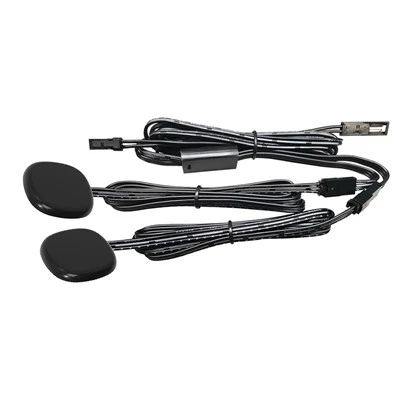
To discuss your cabinet LED driver needs and find the right solution for your setup, feel free to connect with our team for a consultation.
LED Controller and RF Remote References
- Lighting Research Center, Rensselaer Polytechnic Institute. (2022). "LED Flicker: Causes, Impacts, and Mitigation Strategies."
- National Electrical Manufacturers Association (NEMA). (2021). "LED Driver Performance Standards for Low-Voltage Cabinet Lighting."
- International Association of Lighting Designers (IALD). (2023). "Best Practices for Cabinet LED Installation and Driver Compatibility."
- Department of Energy. (2020). "Energy Efficiency and Performance of LED Drivers for Residential and Commercial Applications."
Dongguan Lanbaoli Intelligent Technology Co., Ltd.
As one of the most professional cabinet led driver manufacturers and suppliers in China, our products have good reputation in the market. We warmly welcome you to buy durable cabinet led driver for sale here and get pricelist from our factory. Quality products and low price are available.
Address: 10th Floor, Building 32, Golden Town, No.7 Technology Avenue, Houjie Town, Dongguan City, Guangdong Province
E-mail: anna@lampow.cn
WebSite: https://www.lblsensors.com/
