Hey there, fellow UV equipment heads! Let’s cut to the chase—if you’ve ever dabbled in UV disinfection, water treatment, or industrial curing, you’ve probably stumbled over two terms that sound so similar they might as well be twins: fused quartz and UV quartz sleeves. I see this confusion all the time with customers reaching out to my team (we’re the go-to UV quartz sleeve suppliers, fyi) thinking they’re interchangeable, and lemme tell ya—nothin’ could be further from the truth. Mess this up, and you’re lookin’ at subpar UV output, shortened gear life, or even a full system crash mid-job. Today, we’re breaking this down like we’re geeking out over our favorite piece of gear, no stuffy textbook jargon (okay, maybe a little sciency stuff, but I’ll keep it plain). UV Quartz Sleeve
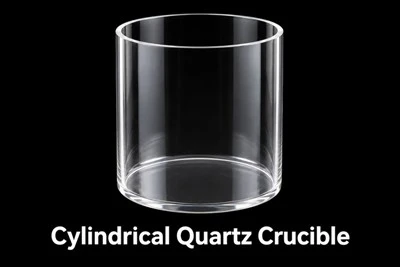
First off, let’s nail the basic vibe of fused quartz. You know quartz, right? That super hard, clear mineral you find in countertops or watch crystals? Fused quartz is basically quartz that’s been melted down—real hot, like 1,700°C (3,092°F) hot—until it flows, then cooled into that solid, glassy (but not regular glass, trust me) shape. Wait, but why is fused quartz a big deal for UV? Let’s get the science straight, no fluff. Regular glass (like your kitchen window) melts at way lower temps, has all kinds of impurities, and basically bails on UV light—especially the deep UVC that kills bacteria and viruses. Fused quartz, though? It’s like UV’s BFF. Its molecular structure is so pure (99.99% SiO2, give or take) that it lets that short-wavelength UVC pass through almost 90%—way better than any other glass out there. That’s why it’s the gold standard for actual UV-transmitting components. It also handles insane temperature swings—like if your UV lamp kicks on and goes from room temp to 800°C in two seconds, fused quartz doesn’t crack. That’s thermoshock resistance we’re talkin’ about. It’s also super durable, resists chemical corrosion (perfect for water treatment with funky chemicals), and doesn’t turn yellow over time like cheaper stuff. Fused quartz is the core material behind every high-performance UV part that needs to actually pass UV light.
Now, what’s a UV quartz sleeve? Let’s paint a picture: imagine you have a powerful UVC lamp that’s heating up like crazy, sitting in a tank of water, or exposed to chemicals that would eat away at it. You can’t just leave that lamp out in the open, right? That’s where the UV quartz sleeve comes in. It’s a protective tube—usually a hollow cylinder—made from fused quartz (wait, hold up, is that all?). No, not exactly. Let’s clarify: every UV quartz sleeve is made from fused quartz, but not every fused quartz part is a UV quartz sleeve. The sleeve’s whole job is protection, not just light transmission. It wraps around the UV lamp, creating a barrier between the lamp and whatever it’s treating (water, air, surfaces, whatever). But here’s the key: sleeves aren’t just a random chunk of fused quartz. They’re engineered for specific use cases. Let’s break down how their design differs from other fused quartz parts. For one, sleeves are precision-machined—super tight tolerances, like within a few thousandths of an inch, so they fit snugly around the lamp without leaving gaps. Gaps would mess up UV output, like trying to watch a movie through a screen door. Also, sleeves have to seal properly, so they’re made with smooth, consistent edges, sometimes with flanges or caps to lock them into place on your UV system. Unlike a fused quartz lens that’s just for letting light pass through, sleeves have to handle external stresses: water pressure, thermal expansion from the lamp’s heat, chemical exposure from the fluid around them.
Wait, let’s make the difference concrete, because I’ve had customers ask “why not just use a big fused quartz tube as a sleeve?” Great question. Let’s use a common example: a municipal water treatment UV system. The heart of that system is a UVC lamp that emits 254 nm light—this is the germ-killer. Fused quartz is the only material that lets that light pass through efficiently, so you need a sleeve made of fused quartz that’s as clear and pure as possible. But if you used a regular fused quartz tube not made for sleeves? It might have tiny, invisible bubbles or impurities that block UVC, or its walls might be too thin to handle the water pressure (like 100 psi or more in some systems) and crack, or it might not have the right length to fit the lamp properly, leading to dead spots where bacteria aren’t getting killed. Another example: industrial UV curing for inks or coatings. Here, you might use a UV lamp that emits UVA or UVB (wait, no, curing often uses UVA, but same fused quartz base). The sleeve here has to protect the lamp from overspray and fumes from the curing material, so it’s coated? No, wait, no—sleeves are pure fused quartz, but their thickness is tailored. Curing sleeves are often a bit thicker than standard water treatment sleeves because they have to handle not just pressure but also any airborne contaminants that might scratch them.
Another big difference: purpose beyond material. Fused quartz is a material with specific physical and optical properties (high UVC transmittance, thermal shock resistance, chemical inertness). It’s used for lots of things beyond UV sleeves—like crucibles for melting glass, laboratory beakers, telescope lenses, even parts for semiconductor manufacturing. A UV quartz sleeve? That’s a component whose sole reason for existing is to protect a UV lamp while preserving (as much as possible) the lamp’s UV output. So when we (as UV quartz sleeve suppliers) make these, we have to factor in way more variables than just the quartz material: system compatibility, lamp size, flow rate of the fluid around it, chemical makeup of the medium, pressure requirements, even the type of UV lamp being used. For example, a sleeve for a low-pressure mercury lamp (used in residential water purifiers) is way smaller than a sleeve for a high-pressure UV lamp (used in industrial wastewater treatment). We also have to make sure the sleeve doesn’t absorb any UV light—so we pick the highest-grade fused quartz (like Spectrosil or Infrasil, for the nerds) that has the least amount of metal impurities, which would suck up UVC. Fused quartz used for a telescope lens might have different priorities—clarity for visible light, not UVC transmittance—so it’s a different grade, even though it’s the same base material.
Wait, let’s talk about common mistakes I see. Last year, a guy from a small manufacturing plant hit us up saying his UV system was suddenly cutting the water flow, and the UV kill rate dropped 30%. He’d gone to a hardware store, bought a “fused quartz tube” to replace his broken sleeve, and thought it’d work. Turns out that tube was made from lower-grade fused quartz, had bubbles in the walls, and was a different length—so not only did it block 20% of the UVC, it was too wide, causing water to flow around the lamp instead of through it, leading to those dead spots. That’s the problem with not knowing the difference: you buy a material that’s technically fused quartz, but it’s not engineered to be a UV quartz sleeve for your specific setup. Another mistake: people thinking all UV quartz sleeves are the same. Nope, a sleeve for a water system isn’t the same as one for an air purification system, and you can’t mix and match them without issues.
Let’s get into the nitty-gritty of properties to make this super clear. First, optical performance: Fused quartz (the right grade) has a UVC transmittance of ~90% at 254 nm, which is non-negotiable for germicidal applications. A UV quartz sleeve is made from this exact fused quartz, but its transmittance might be slightly lower if it’s thicker (thicker quartz blocks more light) or if there’s a tiny manufacturing flaw. But the goal is to keep that transmittance as high as possible. Thermal properties: Fused quartz has a super low coefficient of thermal expansion, meaning it doesn’t expand or contract much when heated, so it won’t crack when the lamp turns on. UV quartz sleeves are designed to handle the specific heat of their paired lamp—low-pressure lamps run cooler, so sleeves can be thinner; high-pressure lamps get way hotter, so sleeves are thicker to avoid thermal failure. Chemical resistance: Fused quartz is inert to most acids and bases, which is why it’s used in labs. UV quartz sleeves have to resist whatever they’re exposed to—chlorine in water, solvents in industrial processes, even airborne mold spores. So we pick fused quartz grades that are extra resistant to those specific chemicals when making sleeves.
Wait, what about cost? Let’s be real, you’re gonna care about that. Fused quartz is pricier than regular glass, but it’s a long-term investment. UV quartz sleeves are a consumable, right? They need to be replaced every 1-5 years, depending on use. If you buy a cheap fused quartz tube that’s not a proper sleeve, it might crack in a month, leading to a replacement cost for the sleeve and maybe even a new UV lamp if it gets damaged. That’s way more expensive than buying a quality UV quartz sleeve that’s built for your system. I tell every customer this: don’t skimp on the sleeve. It’s the unsung hero of your UV system.
So to recap the key differences, let’s make a quick bullet point (even though I’m avoiding stuffy lists): 1. Fused quartz is a high-purity material with great UVC transmission and thermal/chemical properties. It’s used for lots of parts, not just UV sleeves. 2. UV quartz sleeve is a specific component made from fused quartz, designed to protect UV lamps while maintaining optimal UV output. It’s engineered for specific system needs. 3. You can’t use any fused quartz as a UV quartz sleeve—its shape, thickness, precision, and grade have to match your setup.
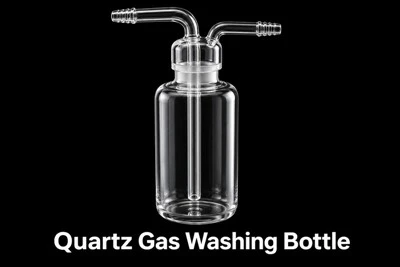
Now, if you’re out there shopping for replacements for your UV system, or building a new setup, and you’re not sure whether you need fused quartz for a custom part or a proper UV quartz sleeve for your lamp, hit us up. We’ve been supplying UV quartz sleeves for all kinds of applications—water treatment, air purification, industrial curing, even small residential purifiers—and we can help you pick the right grade, size, and design for your needs. No pressure, just honest advice, not upselling.
Fused Quartz Ball References: 1. Schneider, S., et al. (2019). "Optical Properties of Fused Quartz for Germicidal UV Applications." Journal of Photochemistry and Photobiology A: Chemistry. 2. American Water Works Association. (2021). "UV Disinfection Systems for Municipal Water Supply." AWWA Manual M52. 3. Heraeus Quarzglas. (2022). "Grades of Fused Quartz for UV Technology: A Guide." Technical Publication TP-UV-001. 4. Ultraviolet Technologies Association. (2020). "Consumable Replacement Guidelines for UV Quartz Sleeves." UTA Publication CP-007.
Lianyungang Tuohai Quartz Products Co., Ltd.
As one of the most professional uv quartz sleeve manufacturers and suppliers in China, we’re featured by quality products and good price. Please rest assured to wholesale bulk durable uv quartz sleeve in stock here and get quotation from our factory. We also accept customized orders.
Address: No.68, Huanghe Road, Shiliu Street, Donghai County, Lianyungang City, Jiangsu Province
E-mail: 13338995552@163.com
WebSite: https://www.thquartzglasstube.com/
