If you’re here, chances are you’re looking into titanium blocks—whether you’re a machinist needing a strong, lightweight base for custom parts, a designer spec’ing materials for aerospace or medical equipment, or just someone curious about how the stuff that makes jet engines and hip replacements comes together. As a titanium block supplier, I get asked all the time: “Wait, you just melt titanium and pour it into a mold, right?” Uh, no. Titanium is weirdly unforgiving to work with—one wrong step and you end up with a brittle, useless block instead of the 99.9% pure, workable material your project needs. Let me walk you through the process we use every day to make blocks that hold up to everything you throw at them, no fluff, just the real stuff. Titanium Block
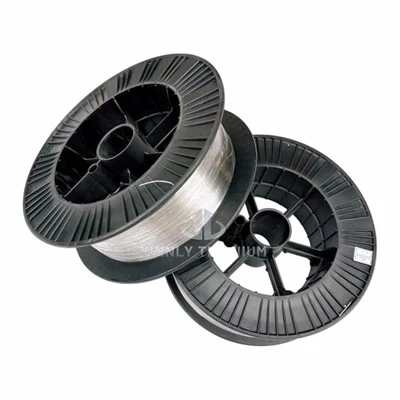
First, let’s start with the raw material. You can’t make a good titanium block from just any scrap. We start with what’s called sponge titanium—yeah, it’s a weird, porous, grayish chunk that looks like dried sea sponge, not something you’d want near your shop. How do we get that? The Kroll Process, which is the standard for 90% of titanium made today. Here’s the quick breakdown: you heat titanium tetrachloride (that’s a liquid made from titanium ore, like ilmenite or rutile) with magnesium metal, and it reacts to separate pure titanium from the chlorine. The leftover magnesium is later removed, and you’re left with that sponge.
Why the sponge? Because it’s consistent, and we can mix it with small amounts of alloying elements if we need custom blocks. Wait, most titanium blocks are either pure (Grade 1 to Grade 4, with Grade 5 being Ti-6Al-4V, the workhorse alloy everyone uses) so we can adjust the sponge mix to hit exactly the composition you ask for. No cutting corners here—we test every batch of sponge for contaminants like iron or oxygen before we even touch it. Contaminations are the enemy: too much oxygen makes titanium super brittle, so we aim for super low levels, usually under 0.2% for pure blocks.
Next step: getting the sponge into a shape we can melt. We charge the sponge into a large steel container, and add any alloying elements we need—like aluminum and vanadium for Grade 5, since those are the usual add-ins. Then we press it into a dense briquette, right? Not just a light block—we use a hydraulic press that squeezes the sponge so hard it compacts into a solid, dense form, almost like a brick. That’s important because loose sponge would act like a sponge when melted, trapping gas and leaving bubbles in your final block. No one wants a block full of voids—they crack when you machine it, so we skip that.
Now the part everyone fears: melting titanium. Titanium reacts with oxygen, nitrogen, even hydrogen at high temps—if it touches air while molten, it becomes a hard, brittle mess that’s useless. So we can’t use regular furnaces like you’d melt steel in. We use vacuum arc remelting (VAR) or electron beam melting (EBM), but for solid blocks, VAR is the go-to for us, and for good reason. Here’s how VAR works: we take that compacted sponge briquette, stick it as an electrode in a vacuum chamber, then we strike an arc between the briquette and a water-cooled copper mold at the bottom of the chamber. The arc heats the sponge to like 3,500°F—hot enough to melt titanium, but since we’re in a total vacuum, there’s zero oxygen or nitrogen to react with it.
Wait, that copper mold is key too. The molten titanium drips down into the copper mold, which cools it instantly, forming a solid ingot. We do VAR twice, sometimes three times, to make sure the alloy is evenly mixed. First melt might have a little uneven distribution of aluminum or vanadium, so a second melt stirs it all up. That homogeneity is what makes a block machineable—no weak spots where parts break mid-cut. I’ve seen first-melt blocks that looked good but had hidden pockets of high vanadium that made machining impossible, so double (or triple) VAR is non-negotiable for us.
Once we have a VAR ingot, it’s time to turn that into a block. Ingot from VAR is usually a long, cylindrical chunk, so we need to forge it. Forging is where we shape it, and also refine the grain structure. Titanium’s grain is coarse when it comes out of VAR, which makes it less strong. We heat the ingot to around 1,800°F—this is below the melting point, so it’s hot enough to be pliable but not molten. Then we use a huge hydraulic forging press to hammer it into a rectangular block, or whatever size you order.
Why forge instead of just machining the ingot straight? Forging breaks up those coarse grains, makes the metal denser, and adds strength. It’s like kneading bread—you’re removing gaps and making the structure uniform. We’ll forge the ingot down to a rough size, say 12x12x24 inches, then let it cool slowly in a controlled environment. Fast cooling can cause stress, which leads to cracks later, so we take our time here. No rushing the cool-down—we’ve had batches crack because we tried to speed it up, and that’s just wasted material and time.
After forging, we do a heat treatment to relieve stress. Even with forging, there’s internal tension from all the hammering and cooling. If we skip this, the block will warp when you machine it, or even crack on its own. The heat treatment here is simple but specific: we heat the block to 1,500°F, hold it there for a few hours, then let it cool very slowly in a furnace. This takes all that internal stress out, so the block stays stable when you start cutting. It’s like letting a tight rubber band relax before you stretch it again.
Now the finishing steps, which matter a lot. First, we machine off the “skin” of the block—there’s a rough, oxidized layer from forging and VAR that’s full of contaminants, so we mill that away on the top, bottom, and sides. We do this with a CNC machine, making sure the dimensions are exact to your order—whether you need a 6x6x12 inch block with ±0.005 inch tolerance, or a custom shape. We also do a surface inspection with an ultrasonic tester to check for hidden voids or cracks. No sending out a block that could fail on a job—we’ve got enough guys out there relying on our stuff for aerospace parts, medical implants, and racing components, so that inspection is non-negotiable.
Wait, a quick note: not all titanium blocks are the same. If you need Grade 5 Ti-6Al-4V, we adjust the sponge mix to add 6% aluminum and 4% vanadium during the charging step. If you need medical-grade titanium, we use extra-pure sponge, no trace elements, and we test every batch for biocompatibility. For marine-grade, we might add a tiny bit of molybdenum to resist corrosion. So it’s not a one-size-fits-all process, which is why talking through your needs with us is key. A lot of suppliers will just throw a generic block at you, but that’s not how we roll.
I know this sounds like a lot, and honestly, it is. Titanium block making isn’t like making aluminum blocks, or steel—you can’t cut corners on the vacuum, the forging, the heat treatment. Mess up one step, and you’ve got a block that’s good for nothing but scrap, which is a huge waste (titanium is expensive, and scrap adds up fast). That’s why we’ve honed this process over 10 years of doing this, tweaking small things each year to make our blocks better.
If you’re in the market for titanium blocks—whether for prototype machining, production runs, or custom projects—we’ve got you covered. We stock common sizes and alloys, but we also do custom sizes, custom grades, and even heat-treated blocks ready to machine right away. No long lead times for most standard orders, and we test every single batch before it leaves our shop.
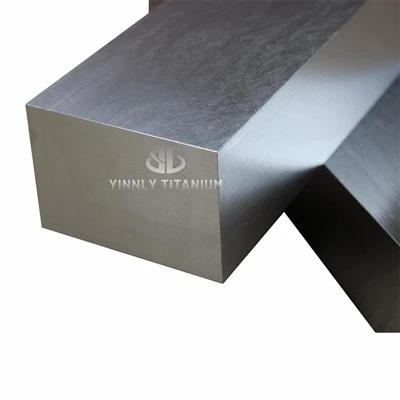
If you’ve got questions about the process, need a quote, or want to talk about what type of titanium block is best for your project, don’t hesitate to reach out. We’re here to make sure you get the material that works for your job, no guesswork, no garbage blocks.
Titanium Plate References
Kroll, W. J. (1940). The production of ductile titanium. Journal of the Electrochemical Society, 78(1), 35-47.
Davis, J. R. (Ed.). (1994). Titanium and titanium alloys: Processing, properties, and applications. ASM International.
International Organization for Standardization. (2019). Titanium alloys for aerospaceForging, heat treatment, and inspection specifications. ISO 5832-11.
Baoji Yinnly Titanium Co., Ltd.
Baoji Yinnly Titanium Co., Ltd. is one of the most professional titanium block manufacturers and suppliers in China, featured by quality products and good service. Please rest assured to buy bulk titanium block in stock here and get quotation from our factory. Customized orders are welcome.
Address: Unit 902, Building 1, Creative Building, No.195, Gaoxin Avenue, High-tech Zone, Baoji City, Shaanxi Province
E-mail: anna@yinnlyti.com
WebSite: https://www.yinnlyti.com/
