Hey there, fellow coffee lovers and anyone who’s ever stared at a coffee carafe going, “Wait, how many actual cups is that anyway?” Coffee Carafe
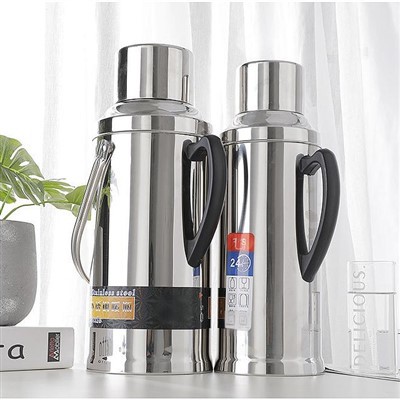
If you’re like me—someone who’s restocking a café, kitting out a home office, or just trying to figure out if that big carafe from the supplier I work with is enough for my Saturday brunch crew—you’ve probably Google-searched this exact question more times than you’d care to admit. I’ve been in the coffee carafe game for a few years now, and let me tell you: it’s way trickier than it sounds. Most of the answers online are either super vague (“a pot!”) or totally out of touch with how real people drink coffee. Today, I’m breaking it down like we’re geeking out over our favorite brew—no stuffy industry jargon, just straight-up facts.
First off, let’s kill the big myth right away. You know the one: every carafe label says “12-cup,” right? But if you pull out a measuring cup and fill that up, you’re gonna get way more than a regular “cup” of coffee. What’s that about? Oh, right—industry standards for what counts as a “cup” in coffee gear aren’t the same as the legal “cup” we use for cooking. The Specialty Coffee Association (SCA)—you know, the folks who set the bar for good coffee quality—defines a standard coffee cup as 5 ounces. Wait, 5? That’s tiny! Most of us pour 6, 8, even 10 ounces of joe in our mugs. And when it comes to the big carafe labels? Manufacturers use 6 ounces as their “cup” number these days, mostly because it’s a happy medium between the old SCA 5-oz shot and the bigger mugs people actually grab. But here’s the thing: that label on your 12-cup carafe? That’s 72 fluid ounces total. If you’re pouring 8-oz mugs, that’s 9 drinks. If you’re doing 10-oz? That’s 7. Wait, hold on—did I just do math in my head? Yeah, don’t worry, I’ll save you the trouble later.
But let’s back up. I’m a coffee carafe supplier, so I work with these numbers every single day. Let’s start with the most common carafe sizes because that’s what most people deal with. The workhorses: 8-cup, 10-cup, and 12-cup. Those are the ones you see on every drip coffee maker, in every office break room, and on home counters across the globe. But wait—let’s translate that to actual coffee you’d drink.
Take the 8-cup carafe first. Label says 8 cups, so that’s 48 fluid ounces if we’re using that 6-oz industry “cup.” Let’s be real: 6 oz is like a tiny espresso shot cup—we don’t do that. If you’re making regular coffee for yourself (say, 8 oz per mug), that’s 6 full mugs. If you’re a light drinker, maybe you split it into 8 of those tiny 6-oz “label cups” that no one actually owns. But here’s where context matters. If you’re a café owner restocking carafes for a morning rush, you know your regulars: some grab a quick 4-oz pour, others a 12-oz latte. So that “8-cup” carafe? It might hold more or less depending on who’s drinking it. That’s why when a café comes to me to bulk order carafes, we don’t just go by the label—we ask, “Who’s using this? How big are their mugs?”
Then there’s the 10-cup carafe. Label math: 60 fluid ounces. For 8-oz mugs, that’s 7.5—so roughly 7 big cups, or 10 of those tiny label ones. I see this one a lot in small offices, maybe 5-8 people. If half the team drinks coffee, that’s enough for a full morning before a refill. And the 12-cup? 72 fluid ounces. For 8-oz mugs, that’s 9, which is perfect for a family brunch, a group meeting, or a café’s mid-morning pickup. But here’s a fun twist: thermal carafes are a whole different beast. Because they keep coffee hot longer, people tend to pour a little more, right? No one wants to refill their thermal carafe every 20 minutes. So when I supply thermal carafes, I usually tell customers to knock the cup count down by one. A 12-cup thermal? That’s 8-9 8-oz mugs, not 12. Makes sense—you don’t wanna end up with half a carafe of lukewarm coffee because someone poured extra to make it last.
Wait, let’s get into the weird ones, too. Not everyone needs a standard size. Some people have those little single-serve carafes for one person—labeled 2-cup, which is 12 oz. That’s exactly one 12-oz mug, duh. Then there are the monster ones—like 20-cup commercial carafes, which are 120 ounces. Let’s do that math: 15 8-oz mugs. That’s for a big bakery, a busy office of 15+ people, or a weekend crowd at a airbnb. I shipped a few of those last month to a little café in Brooklyn that does weekend brunch for 20 folks—they swear by ’em.
But here’s the part no one talks about: why do these labels lie (kind of)? It’s a holdover from the old days. Back when the SCA set that 5-oz standard, carafe manufacturers went with that for labels. Then, as people started drinking bigger coffee, they shifted to 6 oz. But no one wanted to reprint all their labels, so the old “cup” number stuck. It’s like when a cereal box says it has 3 servings, but each serving is half the size you’d actually pour. It’s not a lie—it’s just industry weirdness. And as someone who sells these carafes, I get it: consistency is better than changing the labels every time someone decides to drink bigger coffee. But I always make sure to tell my customers the real number, not the label. No one wants to buy a “12-cup” carafe and end up with only 7 mugs for their family.
Wait, let’s test this with real-life scenarios, because that’s what matters. Let’s say you’re a remote worker working from home, and you make yourself a pot every morning. You use an 8-cup carafe. If you drink a 10-oz mug, that’s 4.8 mugs. So yeah, you’ll have a little left over for a mid-afternoon pick-me-up. If you’re hosting a book club with 6 friends, all drinking 8-oz lattes? A 10-cup carafe is perfect—makes 7, so one person gets a tiny pour (or you just make a second carafe, no big deal). If you’re running a pop-up coffee stand at a farmers market, and you need to make 20 small 6-oz cups? A 20-cup commercial carafe is exactly what you need.
Now, I’ve heard some people say, “Just measure your mug!” And yeah, that works—if you remember to measure every single mug you own. But let’s be honest, most of us have a pile of mugs from Christmas, work events, that one souvenir from a trip. They’re all different sizes. I once had a customer tell me he had a mug that held 16 oz. We had to do the math for his 12-cup carafe: 72 divided by 16 is 4.5. So his big mug only got 4 pours from a 12-cup carafe. He was shocked—said he’d been running out of coffee by 10 a.m. for years. That’s the stuff I deal with every day.
So why does this matter? If you’re a home brewer, it’s not a big deal. But if you’re a café, office manager, or event planner? Getting the carafe size right saves you money, saves you time, and keeps people from complaining that the coffee ran out. I’ve had clients come to me before because they bought the “wrong” size from a big box store—their 12-cup carafe only made 7 mugs, which wasn’t enough for their staff. They swapped to our thermal 12-cup carafes, which hold 70 oz (so 8-9 mugs, but they stay hot for 4 hours, so they don’t need a bigger one). Win-win.
Now, a quick tip from a supplier who’s been in the trenches: when you’re picking a carafe, ignore the “cup” label a little. Look at the total fluid ounces. That’s the real number. For example:
- 48 fl oz = 8-cup label = ~6 8-oz mugs
- 60 fl oz = 10-cup label = ~7.5 8-oz mugs
- 72 fl oz = 12-cup label = ~9 8-oz mugs
- 120 fl oz = 20-cup commercial = ~15 8-oz mugs
And if you’re buying a thermal carafe, subtract 1 from that mug count to account for extra pours. That’s the hack I give every new customer.
I know this might seem like a small thing, but when you’re responsible for keeping people caffeinated—whether it’s your family, your team, or a crowd at a event—getting the carafe size right matters. No one wants to be the person who runs out of coffee mid-meeting or mid-brunch. That’s why I don’t just sell carafes; I help people figure out exactly what size they need, based on how they actually drink.
If you’re tired of guessing, or if you need to restock carafes for your café, office, or event, hit me up. I’ve got all sizes, from tiny 2-cup personal ones to big 20-cup commercial thermal carafes. I’ll even help you do the math so you don’t have to. No stuffy sales talk, just straight answers about coffee and carafes.

At the end of the day, a coffee carafe is more than just a pot to hold brew. It’s the thing that keeps your morning going, that brings people together around the kitchen table, that fuels work projects and weekend plans. So it’s worth getting the size right. Skip the label, look at the ounces, and you’ll never have to ask “how many cups are in a coffee carafe” again.
Thermos Flask Glass Refill References
Specialty Coffee Association. (2020). Coffee Brewing Standards. National Coffee Association USA. (2022). Commercial Coffee Equipment Guide.
Kairun International Co., Ltd.
With abundant experience, we are one of the most professional coffee carafe suppliers in China. Please feel free to wholesale customized coffee carafe made in China here from our factory. For more cheap products, contact us now.
Address: NO.60 JIAZHAI,NANSHI DISTRICT,DONGYANG CITY,ZHEJIANG PROVINCE, CHINA
E-mail: lanzhou301@126.com
WebSite: https://www.kairun-houseware.com/
