If you’re running a tandem axle trailer—whether it’s for hauling construction gear, a toy hauler full of ATVs, or a cargo trailer for your delivery business—wiring its lights correctly isn’t just about avoiding a ticket. It’s about keeping you and everyone on the road safe, and as someone who’s sold truck trailer lights for over a decade, I’ve seen way too many folks cut corners here. A lot of new trailer owners think tandem axles are the same as single-axle, but that’s a big mistake. Tandem setups mean twice as many axles, longer wheelbase, and extra light fixtures to wire, so you can’t wing it. Let’s break this down step by step, no fancy jargon, just real talk from someone who’s spent hours troubleshooting botched trailer light installs. Truck Trailer Lights
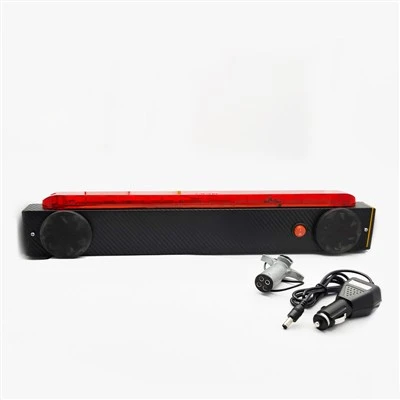
First, let’s get the basics straight. What do you actually need your trailer lights to do? All trailers require turn signals, brake lights, taillights, running lights, and some have side marker or clearance lights, especially for longer tandem trailers. Tandem axles mean you’ll have at least four wheels, so that’s two taillight/brake/turn signal assemblies—one on each side, usually near the back of each axle. Those clearance lights go on the top corners too, right? The wiring harness is the backbone here. If you’re using cheap wire or mismatched connectors, that’s your first problem. I’ve had customers come back saying their lights flicker nonstop, and 9 times out of 10, it’s thin 18-gauge wire instead of the 12-gauge or 14-gauge we recommend for tandem axles. More length means more resistance, so skimping on wire size will burn out bulbs fast.
Next up, the connector type. Most pickup trucks use a 4-pin flat connector, but wait—for tandem trailers over 80 inches wide, that’s not enough. Oh yeah, that’s a key point I remind every customer: if your tandem trailer is wider than 80 inches, you need a 7-pin connector. The 7-pin gives you extra circuits for reverse lights, electric trailer brakes, and that’s super important because tandem axles often have their own braking systems. A lot of people try to adapt a 4-pin, but that leads to dead reverse lights or brake lights that don’t trigger on the rear axle’s lights. Don’t do that. Spend the $20 for a good 7-pin connector from our inventory—we test every one to make sure the pins are corrosion-resistant, because salt, road grime, and rain will eat through flimsy connectors faster than you can say “flat tire.”
Now, the wiring layout, and this is where most DIYers mess up. For a single axle, you run a single wire for each light function, but tandem axles need a parallel circuit, not series. Let me explain that in plain English: series wiring means electricity goes through one light then the next, so if one bulb burns out, the whole circuit dies. Parallel means each light has its own direct connection to the power source. That’s how you get a rear taillight working even if the middle one’s bulb is blown. Here’s the step-by-step for laying it out, starting from the truck’s end:
-
First, prep your truck’s side. Disconnect the battery—super important, don’t skip this. You don’t want to fry your truck’s electrical system with a stray wire. If you’re running a 7-pin, match each pin to the right function: pin 1 is ground, pin 2 is taillights, pin 3 is right turn/brake, pin 4 is left turn/brake, pin 5 is auxiliary (usually reverse lights), pin 6 is electric brakes, pin 7 is spare. Label each pin with a Sharpie right now, so you don’t mix them up later.
-
Run the main harness from the connector at the truck’s hitch all the way along the trailer’s frame. Don’t run it too close to the tires or axles—road grime, water, and moving parts will chew through insulation. Use cable ties designed for trailers (they’re UV-resistant, unlike regular zip ties) every 12 inches or so to keep it secure. For tandem axles, you’ll have a junction box or splice points near each axle to split the wires to the side lights. We sell pre-spliced harness kits made specifically for tandem trailers, which takes the guesswork out of cutting and stripping wires in the middle of a dusty yard.
-
Now, wire the lights themselves. Let’s go function by function:
- Ground: Every light needs a good ground. This is non-negotiable. If your lights are flickery, 90% of the time it’s a bad ground. Don’t ground to the trailer’s frame—scrape the paint off the frame where you mount the light, then screw the ground wire directly to bare metal. Paint is an insulator, so even a tiny bit will kill the power. For tandem trailers, each light should have its own ground, not share one.
- Taillights/Running Lights: These are the easiest. The main taillight wire from the harness splits to both left and right taillight assemblies. Each assembly has a red wire for taillights and a brown wire for brake/turn, right? Wait, no—most 2-pin taillight assemblies have a wire that connects to the running light circuit (usually white, sometimes blue) and a wire for brake/turn (brown). Match that to your main harness wires.
- Brake and Turn Signals: Tandem axles mean you’ll have brake lights on both sides, near the front axle and rear axle, on each side. The left turn/brake wire goes to all three left lights (front axle marker, middle clearance, rear taillight), and the right turn/brake wire goes to all three right lights. That way, when you hit the brakes, every rear light lights up, which makes you way more visible to drivers behind you.
- Clearance and Side Marker Lights: These go on the top corners and along the sides of the trailer. For tandem trailers, you need at least two clearance lights on each side, one near the front and one near the rear. Wire these to the taillight circuit, so they turn on when your running lights are on.
Wait, let’s talk about common mistakes I see all the time. First, crimping connectors instead of soldering them. Crimps come loose after a few trips over potholes, and road vibration will make the wire break right at the crimp. If you can solder, do it—heat shrink the connectors after, and you’ve got a connection that lasts as long as the trailer. If you’re not soldering savvy, use the waterproof butt connectors, not the cheap plastic ones. We stock both solder-on connectors and waterproof butt connectors, and I always recommend the latter for people who don’t want to mess with a soldering gun.
Another big one: not testing each light as you go. Don’t wait until you’re done with the whole install to turn on the lights. After you wire each side, plug the trailer into your truck, turn on the running lights, and check every light. Hit the turn signal—left and right—and make sure both the front and rear side lights flash. Hit the brakes, same thing. Test reverse lights if you have them. If something’s not working right, fix it before you move on to the next step. I’ve had customers come back to me months later saying their brake lights don’t work, and it’s because they skipped the test step, so they had to dig through all the wiring to find a loose splice.
Now, what about LED vs incandescent lights? This is a question I get all the time, and as a supplier, I’m happy to say LED is the way to go for tandem trailers. LED lights use less power, so they won’t draw extra current that could overload your truck’s system, and they last 10x longer than incandescent. For a tandem axle trailer, which has more lights, that’s a huge deal—you won’t be replacing bulbs every few months. The only downside is some older trucks might have a problem with LED resistance, but we sell load resistors that fix that, and they’re easy to splice in if you notice your turn signals are blinking too fast after switching to LED.
Wait, what if you’re installing auxiliary lights for hauling gear, not just the standard lights? A lot of tandem trailers are used for work, so folks want extra lights for loading at night or backing up. That’s where the 7-pin’s auxiliary pin comes in handy. You can run a separate wire from the auxiliary pin to a set of work lights, and control them with a switch in the cab. Just make sure you don’t overload the circuit—those work lights are usually 10 watts each, so a couple is fine, but don’t plug in a 50-watt light without checking the max amperage on your truck’s auxiliary circuit.
Now, let’s wrap up with how to make sure it all works long-term. Tandem trailers see a lot of rough conditions, so maintenance is key. Every 3 months, wipe down the connectors with a dry cloth, and spray them with dielectric grease to keep moisture and corrosion out. Check the wire insulation for cuts, especially where the harness bends around the axle or frame. If you’re towing in salt areas, like near the coast, do this every month. Also, test the lights before every long trip—there’s nothing worse than getting a ticket on the highway because your right rear brake light is out.
Wait, one last thing I should mention: if this all feels too overwhelming, don’t force it. Not everyone’s comfortable crawling under their trailer with a wire stripper, and that’s totally fine. We offer pre-wired harnesses for tandem trailers, and our team can walk you through the install over the phone if you get stuck. I’ve talked to customers who thought they’d never wire a trailer, and 20 minutes later, they had it figured out because we took it slow.
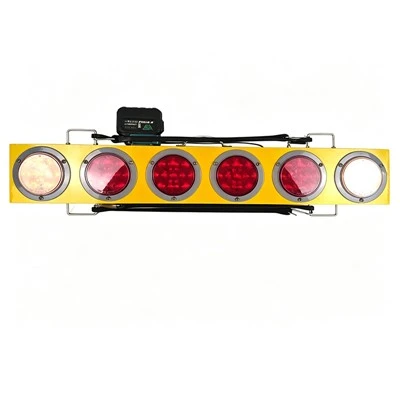
Marker Light At the end of the day, wiring your tandem trailer lights isn’t rocket science, but cutting corners will get you stuck on the side of the road, or worse, cause an accident. We’ve been supplying truck trailer lights for years, and we’ve seen every mistake—so our team can help you pick the right parts, answer any questions, and make sure your install goes smooth. If you’re ready to order parts, or need help troubleshooting a wiring issue, reach out to our team anytime. We’re here to make sure your trailer is safe and road-ready, no matter what you’re hauling.
References
- National Highway Traffic Safety Administration. (2022). Lighting Requirements for Trailers.
- Trailer Life Magazine. (2021). "Tandem Axle Trailer Wiring Best Practices".
- Truck Equipment Manufacturers Association. (2023). Recommended Wire Gauges for Trailer Electrical Systems.
- U.S. Department of Transportation. (2020). Commercial Vehicle Lighting Safety Standards.
Shenzhen Idun Photoelectric Technology Co., Ltd.
As one of the most professional truck trailer lights manufacturers and suppliers in China, we have world-leading production equipment and strong manufacturing capabilities. Please feel free to wholesale customized truck trailer lights at competitive price from our factory. Contact us for more cheap products.
Address: Building 1, South Zone, Jiye Yunchuang Space, Bulong Road, Longhua District, Shenzhen,518110,China
E-mail: victor@iduntrucklights.com
WebSite: https://www.iduntrucklights.com/
