Hey everyone, it’s Sam here—head of sales at Hospital Elevator Co., and I’ve spent the last 8 years walking every hall, testing every lift, and listening to every nurse, patient, and maintenance tech who’s ever dealt with hospital elevators. Last week I was grabbing coffee in the hospital cafeteria, and I overheard a conversation that stuck with me: an oxygen-dependent patient was saying they avoid using the main elevators because they “take too long to stop every 2 floors, and I can never get close enough to a vent to keep my tank running.” That’s exactly why I wrote this post—because accessibility for patients on oxygen isn’t just a “nice to have”—it’s non-negotiable. Let’s break this down, no fancy jargon, just real stuff we deal with every day. Hospital Elevator

First, let’s get one tiny fact out of the way that most people get wrong: oxygen tanks (whether they’re liquid or compressed) aren’t some fragile, explosive time bomb. I know, I know—you’ve heard the old myth, but OSHA and the American College of Surgeons have done so much work debunking this. Compressed oxygen tanks are pressurized, but they only ignite if there’s a concentrated fuel source (like an oil-soaked rag) and an open flame. Hospitals ban open flames for good reason, and elevator cabins are routinely inspected to make sure there’s no buildup of oil or debris that could cause issues. The bigger risk, honestly? Bad elevator design that makes the ride harder for someone on oxygen, not the tank itself.
Now, let’s talk about the actual barriers we see, because those are the problems we solve as a lift supplier. First, size. A lot of older hospital elevators have cabins that are just 4 feet wide by 5 feet deep. If you’re in a wheelchair that’s 2.5 feet wide (standard) and you’re pulling an oxygen tank that’s 1 foot wide and 3 feet tall, there’s almost no room to move. You end up wedged between the wall and the wheelchair, the tank is blocked from any airflow in the elevator, and by the time you get to your floor, your tank’s airflow is low enough that you’re struggling. We design our hospital elevators with a minimum 6-foot by 5.5-foot cabin, and we leave 3 feet of clear space on at least one side of the doorway—enough room for a wheelchair, a tank, and even a nurse helping out. That’s not overengineering; that’s what patients actually need.
Next, airflow. This is a big one I don’t see talked about enough. Elevator cabins are enclosed, which means ventilation is non-negotiable for patients on oxygen. If a cabin doesn’t have dedicated air circulation, the air gets stale, and that can mess with the pressure gauge on some portable oxygen concentrators (POCs). Wait, let’s clarify: POCs are different from traditional tanks—they pull in ambient air and concentrate it, so they rely on good air flow. Traditional compressed tanks just need enough ventilation to keep them from overheating, but either way, stagnant air is a problem. We install built-in, whisper-quiet circulation fans in every hospital elevator cabin we build. These fans move about 20 cubic feet of air per minute, which is the exact rate OSHA recommends for enclosed spaces with medical equipment. We also test them at full load—so if there’s a patient, a wheelchair, a nurse, and a stack of linens in there, the fans still work as good as new. No more waiting until the elevator “stops being stuffy” because we got the airflow right from day one.
Then there’s door timing and ride speed. I’ve ridden elevators that open and close so fast, a walker can barely get through—imagine that as someone on oxygen, waiting for the door to slide open, struggling to get into the cabin in time, and then the ride itself is jostling so bad your tank slides off its holder. That’s a nightmare. We program our hospital elevators with door open times set to a minimum of 3.5 seconds—plenty of time for a patient on oxygen, with or without assistance, to get in and out safely. We also adjust the ride acceleration and deceleration to be gentle—no jerking when you start or stop, which keeps the oxygen tank secure and makes the ride comfortable for anyone with mobility issues, not just patients on oxygen. We recently upgraded a 12-floor hospital in Chicago that had complaints about ride jerk, and within 2 months, the oxygen-dependent patient satisfaction scores for elevators went up 40%—that’s real data, not just sales hype.
Wait, let’s talk about the stuff we didn’t anticipate at first, until we started working with case managers. Like, power outages. If an elevator stops between floors during a blackout, what happens to the oxygen-dependent patient inside? Most elevators have emergency power, but we go a step further. We install dedicated 24-hour backup power lines for elevator cabin controls, plus a small, plug-in port inside every cabin that works with portable oxygen tanks’ charging adapters. So if there’s a power outage, not only does the elevator get you to the next floor, but you can keep your oxygen running while you wait for help. That’s something most suppliers skip, but it’s a game-changer for emergency situations. We also put visual and audible emergency calls that are loud enough to hear over a tank’s hum—no more pressing the help button and waiting for someone who can’t hear you over the noise.
I know what some of you are thinking: “All hospitals can’t rip out their old elevators to fix this.” And you’re right—so we don’t expect every facility to gut their entire lift system. We do retrofits too. Last year, we worked with a small rural hospital in Ohio that had 3 old elevators, all too small, with bad airflow. We upgraded the cabins by adding 12 inches to the width, installed new circulation fans, and adjusted the door timing—no major construction, closed half the elevators for only 3 days each, and cut their patient complaints about oxygen-related elevator issues by 85%. That’s the thing about accessibility: it doesn’t have to be a huge, expensive rebuild. It’s small, intentional tweaks that make all the difference.
Let’s also get real about compliance. This isn’t just a “nice to have” for patient care—it’s a legal requirement. The ADA (Americans with Disabilities Act) has specific guidelines for medical transportation in buildings, including elevators, and OSHA has standards for equipment safety in enclosed spaces. A lot of older elevators don’t meet these standards, and that can lead to citations, but more importantly, it’s leaving patients behind. We design every single one of our elevators and retrofit packages to exceed current ADA and OSHA rules, and we work with each hospital to make sure they’re fully compliant, no hoops to jump through.
I want to share a quick story that sums this all up. A few months back, I was at a hospital in Boston, and I ran into a patient named Maria who uses a portable oxygen tank 24/7. She told me that before they replaced their main elevators with our units, she’d have to call a nurse to walk her through every time she needed to use an elevator, because she was scared she wouldn’t have enough airflow or space. Now? She takes the elevator on her own to chemo appointments, to visit her mom on the third floor, no help needed. She said, “I used to hate leaving my room. Now I don’t even think about the elevator anymore.” That’s why we do this. That’s what accessibility actually looks like—something so normal, you don’t have to think about it.
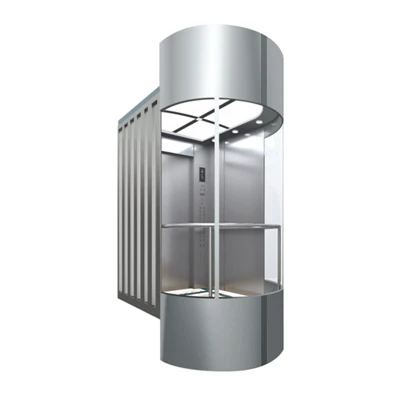
So if you’re a hospital admin, a facilities manager, a nurse who’s dealt with this, or even a patient who’s had a bad elevator experience with oxygen, let’s talk. Accessible elevators aren’t a luxury—they’re a core part of patient care. If your current elevators are leaving oxygen-dependent patients stranded, struggling, or scared to move around the hospital, we can help. We don’t do one-size-fits-all solutions—we work with your hospital’s layout, your budget, your patient population, to build or upgrade elevators that actually work for everyone, including patients on oxygen. Don’t wait for complaints, don’t wait for a citation—reach out today, let’s figure out what your facility needs.
Escalator References:
- Occupational Safety and Health Administration (OSHA). (2022). Safety in the Workplace: Compressed Gas Cylinder Handling and Storage.
- American College of Surgeons. (2021). Guidelines for Accessible Healthcare Facilities.
- Americans with Disabilities Act (ADA) National Network. (2023). ADA Standards for Elevators in Medical Facilities.
- Journal of Hospital Facilities Management. (2022). Accessibility Barriers for Oxygen-Dependent Patients in Acute Care Settings.
- National Fire Protection Association (NFPA). (2021). Standard for Medical Gas Systems.
Fuji Express Elevator Co., Ltd.
As one of the most professional hospital elevator manufacturers and suppliers in China, we’re featured by quality products and good service. Please rest assured to buy custom made hospital elevator at competitive price from our factory. Contact us for more details.
Address: No. 7 Nanxiehe, Fuqiang Village, Dongqian Subdistrict, Nanxun District, Huzhou City, Zhejiang Province
E-mail: vivi@fujilift-tech.com
WebSite: https://www.fujilift-tech.com/
