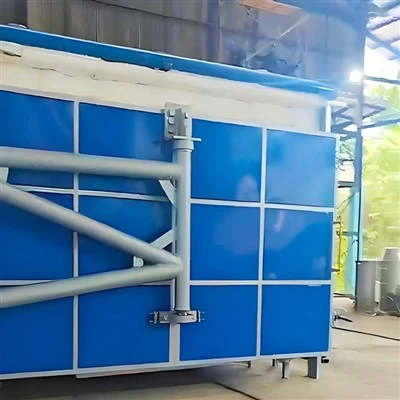
Hey everyone, it’s Jake from your go-to drying kiln supplier, and today we’re tackling a question that pops up at least once a week in our DMs and calls: “Can you dry oak in a kiln?” Let me cut to the chase—yes, you totally can. But it’s not just shoving a stack of oak logs into a kiln and hitting “start.” Oak’s a stubborn, dense hardwood, so if you skip the right steps, you’ll end up with warped, cracked junk that’s useless for furniture, flooring, or cabinetry. I’ve seen it happen too many times to count, and that’s exactly why we built our kilns to handle oak’s unique quirks. Let’s break this down like we’re chatting over coffee, no stuffy jargon, just real talk from someone who’s worked with kilns and wood for 12 years. Drying Kiln
First, let’s get why oak is such a pain to dry. There are two main types of oak, right? White oak and red oak. White oak has tighter pores, higher tannin content, and shrinks way more evenly than red oak. Red oak’s got bigger vessels, so it’s prone to Checking—that’s the nasty splits that form along the ends or edges of boards. Tannins in white oak also leach out as moisture evaporates, and if you dry it too fast, those tannins can get trapped, causing discoloration that’s a nightmare for finish work. I once had a customer bring us a load of red oak boards he’d air-dried for a year, and half of them had end checks so bad they were 2 inches deep. Told him he should’ve used a kiln for the first few months, not just left ’em stacked in his yard.
So how does kiln drying fix this? Air-drying is cheap, but it’s slow—like 6 to 18 months for oak, depending on thickness. If you need oak for a project that’s going to sell (or stay stable in your own home), kiln drying gets it to the right moisture content (MC) way faster, like 2 to 8 weeks for 4/4 (1-inch thick) boards. But you can’t just crank the heat. Oak’s thermal mass is way higher than pine or spruce, so you have to ramp up temperature and humidity gradually. That’s where our kilns stand out—we programmed the drying cycles specifically for oak, not just a one-size-fits-all cycle for every wood type. No more guessing if the humidity’s too low or the temp’s spiking.
Wait, let’s talk about moisture content first because that’s the whole point. Oak for furniture needs to be 6 to 8% MC if it’s going indoors, right? If it’s going outside—like decking or siding—it’s 12 to 15% MC. If you dry it too far below that, it’ll suck moisture back up from the air once it’s installed, swell, and warp. Too high, and it’ll shrink as it dries, causing gaps in floors or loose joints in cabinets. Kiln drying lets you lock that MC in consistently, way better than air-drying. I’ve had customers who switched from air-dried oak to kiln-dried oak for their cabinet shops see a 30% drop in warranty claims because of warped parts. That’s real numbers, not fluff.
Now, common mistakes people make when kiln-drying oak. Number one: over-drying too fast. Some guys think, “Hey, higher temp, faster done!” But oak’s cells hold moisture tight, so blasting 160°F right off the bat will burst those cells, leading to checks and splits. We recommend starting with a low temp—like 120°F for 4/4 boards—and keeping humidity around 85% for the first week. That lets the surface moisture evaporate without the inside keeping up, so the wood stays pliable. Then, over the next couple weeks, we bump the temp up 5°F every other day and drop the humidity 5% each time. For 8/4 (2-inch thick) oak, you take it slower—another 2 weeks at the start—because thick oak takes forever for the inside moisture to move. I learned this the hard way when I ran my first kiln back in 2011; I had a load of white oak beams, cranked the temp, and half had end checks. I lost $2k on that batch, so trust me, patience is key here.
Another mistake: not sorting your boards. If you mix 4/4 and 8/4 oak in the same stack, the thinner boards will dry way faster than the thick ones, leading to uneven shrinkage. We tell all our customers to sort by thickness and species before loading the kiln. Also, stickers—those thin wooden sticks you place between boards to let air circulate. You have to use oak stickers for oak, because if you use pine, the pine might leave resin on your oak boards, which messes up finishing. And don’t skip the stickers! I’ve seen stacks where boards are touching, leading to mold, discoloration, and uneven drying. It’s a little extra work, but it makes all the difference.
What about curing? Kiln drying isn’t just about pulling moisture out—it’s about stabilizing the wood. Oak has natural movement, so if you don’t let it acclimate after kiln drying, it’ll move once it’s in your shop. That’s why we build our kilns with a post-drying cycle, where after we hit your target MC, we hold the temp steady for 2 to 3 days to equalize moisture across every board. Then we let it sit in a low-humidity room (or in the kiln with the vents cracked) for another day so the outside and inside MC match. We call that “equilibrium moisture content,” and our kilns do it automatically, no manual adjustments needed. A lot of cheap kilns skip this, so you end up with boards that look right when you load them, but split a week later. Our customers say this step alone cuts their rework by a ton.
Wait, let’s address the myth that kiln drying ruins oak’s quality. I’ve had so many people say, “Air-dried oak is way stronger!” Yeah, maybe, but kiln-dried oak is just as strong if you do it right, and it’s way more stable. Plus, kiln drying kills pests and mold—huge for people who use oak for wine barrels or furniture that’s going into homes. Red oak can have bark beetle larvae, and kilns at 140°F for a few days will kill every last one, so you don’t have a surprise infestation down the line. I had a customer who makes wine barrels—switched to our kilns, and he hasn’t had a batch with larvae in 7 years. That’s a game-changer for his business, because a bad batch of barrels would cost him $5k easily.
Now, let’s talk about what our kilns do different. We’re not selling the cheap, cookie-cutter kilns you see online that work for pine, but not for dense hardwoods like oak. Our kilns have variable humidity controls, so you can adjust that 5% per day rate we talked about, and we pre-programmed specific cycles for white oak, red oak, 4/4, 8/4, even 12/4 beams. You just tell us what you’re drying, the thickness, and your target MC, and the kiln runs the rest. No guessing. Also, we have built-in sensors that track MC every 6 hours, so if a board dries too fast, the kiln automatically cranks up the humidity. That’s not something you get with basic kilns—you’d have to manually adjust valves and humidity, which is a pain if you’re running a full load.
I know a lot of small woodworkers or hobbyists might be thinking, “I can’t afford a big commercial kiln.” But we have entry-level kilns for hobbyists that handle up to 500 board feet, which is enough for a small shop or someone who’s rescuing oak trees from their yard. We also offer installation and training, so you’re not left staring at the control screen like a lost puppy. Last year, we helped a guy in Michigan who had 30 oak trees taken down from his property—he wanted to turn them into dining tables, and with our small kiln, he got his oak dried in 3 weeks, no checks, perfect MC. He sold the first table for $1,800, and he’s already got a second order. That’s the kind of win we love to see.
Wait, let’s wrap this up with a real example. Last quarter, a customer who runs a flooring company bought one of our medium-sized kilns. Before that, he was air-drying oak for 12 months, and he had a 20% reject rate because of checks and warping. After using our kiln, he got a 4% reject rate, and he can turn around a load of oak in 6 weeks instead of a year. His production went up, his costs went down, and his customers are happier because the floors don’t gap a month after installation. That’s the power of a kiln designed for oak, not just a generic kiln.
So, to circle back to the original question: yes, you can absolutely dry oak in a kiln—but only if you use the right process. Skip the fast temp ramps, sort your boards, use the right humidity, and invest in a kiln that’s built for dense hardwoods like oak. If you’re tired of wasting oak batches, dealing with warped boards, or waiting 18 months for air-dried wood, we can help. We’re not just selling kilns—we’re solving the problems you deal with every day, like checking, inconsistent MC, and pests.
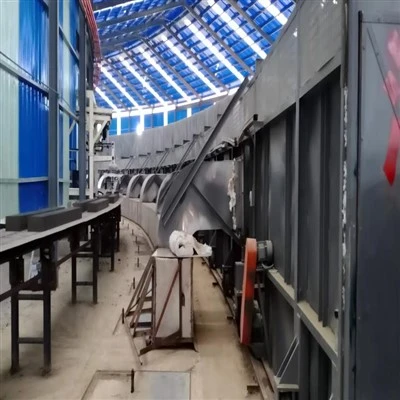
If you’re ready to stop guessing and get your oak dried right, hit us up to chat through your needs. We’ll walk you through what size kiln works for your shop, what cycle you need for your specific oak, and even help you set up the whole drying process. No pushy sales pitches, just real advice from someone who’s been in the wood game for years.
Large Section Multi Lane Tunnel Kiln References
- Forest Products Laboratory. (2010). Wood Handbook: Wood as an Engineering Material. U.S. Department of Agriculture.
- Wengert, E. M. (2002). Kiln-Drying Hardwoods. USDA Forest Service, Forest Products Laboratory.
- Simpson, W. T. (1991). Dry Kiln Operators Manual. USDA Forest Service, Forest Products Laboratory.
- Canadian Wood Council. (2018). Kiln Drying Guidelines for Hardwoods. Canadian Wood Council.
Henan Yaxin Kiln Co., Ltd.
Henan Yaxin Kiln Co., Ltd. is one of the most professional drying kiln manufacturers and suppliers in China. With abundant experience, we warmly welcome you to buy high quality drying kiln with the latest design from our factory. Good service and punctual delivery are available.
Address: Jixian Industrial Zone, Shangqiu City, Henan Province
E-mail: 1543563178@qq.com
WebSite: https://www.hnyxkiln.com/
