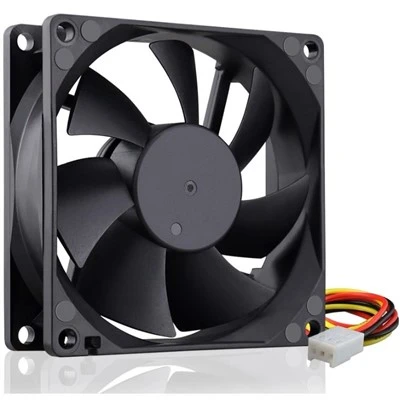
Adjusting the speed of an AC axial fan is a task that many users, from DIY enthusiasts to industrial operators, may need to undertake at some point. As a trusted AC axial fan supplier, I’ve had the privilege of assisting numerous customers in understanding and implementing effective speed – adjustment methods. In this blog, I’ll share some reliable ways to adjust the AC axial fan speed, taking into account different application scenarios and user requirements. AC Axial Fan
1. Using a Variable Voltage Transformer
A variable voltage transformer, often referred to as a Variac, is a simple and effective device for adjusting the speed of an AC axial fan. AC axial fans are designed to operate at a specific voltage, usually 110V or 220V in most common household and industrial settings. By changing the input voltage, we can control the fan’s rotational speed.
The working principle behind this method is based on the fact that the speed of an AC motor (the core component of an axial fan) is approximately proportional to the applied voltage. When we reduce the voltage, the magnetic field strength within the motor weakens, resulting in a slower rotation of the motor shaft, which in turn reduces the fan blade’s speed.
However, it’s crucial to ensure that the voltage remains within the safe operating range of the fan. If the voltage is too low, the fan may not start properly or may stall during operation, leading to potential damage to the motor. Additionally, when using a variable voltage transformer, make sure to use it in a well – ventilated environment, as it generates heat during operation.
2. Phase – Angle Control
Phase – angle control is another popular method for adjusting the speed of an AC axial fan, especially in applications where precise speed control is required. This method involves controlling the portion of the AC voltage waveform that is applied to the fan motor.
In a normal AC power supply, the voltage alternates in a sinusoidal waveform. Phase – angle control works by cutting off a part of this waveform, effectively reducing the average voltage applied to the motor. This is typically achieved using a silicon – controlled rectifier (SCR) or a triac.
By adjusting the firing angle of the SCR or triac, we can control the amount of voltage that reaches the fan motor. A smaller firing angle means more of the voltage waveform is allowed to pass through, resulting in a higher average voltage and a faster fan speed. Conversely, a larger firing angle reduces the average voltage and slows down the fan.
One advantage of phase – angle control is its high efficiency and relatively low cost. It can be easily implemented using off – the – shelf components and is suitable for a wide range of fan sizes and power ratings. However, this method may generate some electrical noise, which can interfere with other electronic devices in the vicinity. It’s important to use proper filtering and shielding techniques to minimize this issue.
3. Using a Fan Speed Controller
For those who prefer a more user – friendly and integrated solution, a dedicated fan speed controller is an excellent option. These controllers are specifically designed for AC axial fans and provide a convenient way to adjust the fan speed.
A typical fan speed controller consists of a control panel, a power supply section, and a speed – adjustment circuit. The control panel usually has a potentiometer or a digital display that allows the user to easily set the desired fan speed. The power supply section ensures that the correct voltage is delivered to the fan motor, while the speed – adjustment circuit adjusts the voltage or the phase angle according to the user’s settings.
Fan speed controllers come in various types, such as analog and digital. Analog controllers are generally simpler and more cost – effective, offering a continuous range of speed adjustment. Digital controllers, on the other hand, provide more precise speed control and may include additional features such as temperature sensing and automatic speed adjustment.
When selecting a fan speed controller, it’s important to consider the power rating of the fan, the control range, and any additional features that may be required for your specific application.
4. Application – Specific Considerations
The choice of speed – adjustment method also depends on the specific application of the AC axial fan.
Industrial Applications
In industrial settings, AC axial fans are often used for ventilation, cooling of machinery, or in manufacturing processes. In these applications, reliability and precision are of utmost importance. Phase – angle control or dedicated fan speed controllers are commonly used, as they can provide accurate speed adjustment and can be integrated into the overall industrial control system.
For example, in a large – scale manufacturing plant, multiple fans may need to be controlled simultaneously to maintain a consistent temperature and air quality. A centralized fan speed control system can be used to adjust the speed of all the fans based on the real – time temperature and humidity data collected from sensors throughout the facility.
Household Applications
In household applications, such as in air conditioners, exhaust fans, or personal cooling fans, simplicity and cost – effectiveness are key factors. Variable voltage transformers or basic analog fan speed controllers are often sufficient.
For instance, if you have a small exhaust fan in your bathroom, you can use a simple variable voltage transformer to adjust its speed according to your needs. This allows you to reduce the noise level when the fan is not required to run at full speed.
Automotive Applications
In automotive applications, AC axial fans are used for engine cooling, cabin ventilation, etc. The speed adjustment in these cases needs to be carefully coordinated with the vehicle’s electrical system and engine management system. Specialized automotive fan speed controllers are used, which can adjust the fan speed based on the engine temperature, coolant level, and other parameters.
5. Safety Precautions
When adjusting the speed of an AC axial fan, safety should always be the top priority.
- Power Off: Before making any adjustments to the fan or its control system, always turn off the power supply to avoid electric shock.
- Proper Installation: Ensure that all components, such as variable voltage transformers, fan speed controllers, and wiring, are installed correctly and securely. Loose connections can cause overheating and electrical fires.
- Insulation: Use insulated tools when working with electrical components to prevent short – circuits and electrical hazards.
- Compliance: Make sure that all speed – adjustment methods and components comply with relevant safety standards and regulations.
Conclusion
Adjusting the speed of an AC axial fan is a practical skill that can enhance the performance and efficiency of the fan in various applications. Whether you are using a variable voltage transformer, phase – angle control, or a dedicated fan speed controller, each method has its own advantages and limitations. As an AC axial fan supplier, I’m committed to providing high – quality fans and reliable technical support to help you make the best choice for your specific needs.

If you are interested in purchasing AC axial fans or need more information about speed – adjustment methods, please feel free to contact us for further discussion. We look forward to working with you to provide the most suitable fan solutions for your projects.
EC Axial Fan References
- "Electric Machinery Fundamentals" by Stephen J. Chapman
- "Power Electronics: Converters, Applications, and Design" by Ned Mohan, Tore M. Undeland, and William P. Robbins
- Technical manuals of various AC axial fan manufacturers
Dongguan Shengzhirong Electronics Co., Ltd.
As one of the most professional ac axial fan manufacturers and suppliers in China, our products have good reputation in the market. Please rest assured to wholesale high quality ac axial fan made in China here from our factory. Customized orders are welcome.
Address: 6/F, Building 2, No.68, Shunxing 2nd Road, Dajingtou 2nd Industrial Zone, Dalang Town, Dongguan City, Guangdong, China
E-mail: szr_coolingfan@163.com
WebSite: https://www.szrfan.com/
