If you’ve ever ordered galvanized steel pipe for a project—whether it’s plumbing, fence installation, structural framing, or agricultural irrigation—you’ve probably found yourself asking a simple, loaded question: What’s the tensile strength of galvanized steel pipe? It’s not a trivial detail. Tensile strength tells you how much pull, stress, or weight a pipe can handle before it stretches, breaks, or fails entirely, and it’s the difference between a project that holds up for decades and one that causes headaches (or costly repairs) within a few years. As someone who’s supplied galvanized steel pipe to tradespeople, construction teams, farmers, and small business owners for over 12 years, I’ve fielded this question a thousand times. The answer isn’t a one-number stat you can pull off a website, though. It depends on a few key factors—all of which I’ll break down like I would for a customer standing in my warehouse, holding a pipe and asking, “Is this the right one for my job?” Galvanized Steel Pipe
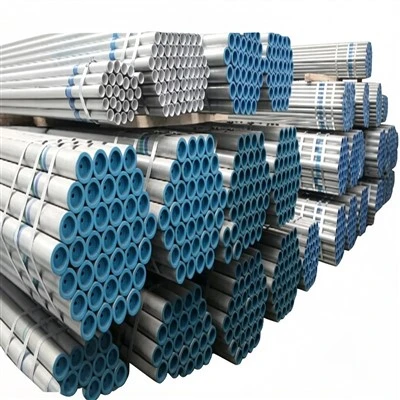
First, let’s get clear on what we mean by “galvanized steel pipe,” because that term covers more than most people realize. Galvanization is the process of coating steel with a thin layer of zinc to prevent rust, right? But there are two main types of galvanized pipe, and they have totally different strength profiles. There’s hot-dip galvanized pipe (the most common for industrial and structural use) and electro-galvanized pipe (thinner zinc coating, usually for lighter, non-structural jobs like small conduit). When we talk about tensile strength for the pipes that most of my customers buy, we’re talking about hot-dip galvanized, but it’s important to note that the zinc coating adds almost nothing to the pipe’s tensile strength—all the strength comes from the underlying steel. The zinc is just the protective layer, so if you see a stat for “galvanized pipe strength,” it’s referring to the base carbon steel that’s been coated.
Now, tensile strength is measured in either pounds per square inch (PSI) or megapascals (MPa), and for most standard galvanized steel pipe, that number falls between 40,000 PSI and 70,000 PSI. Wait, that’s a wide range, I know. Let’s narrow it down. For the most common pipe grades you’ll see in the market—Grade A, Grade B, and Grade X-42—here’s how it breaks down. Grade A galvanized pipe, the lightest structural grade, has a minimum tensile strength of 48,000 PSI (about 331 MPa). That’s enough for things like fence posts, low-pressure irrigation lines, or non-load-bearing framing. Grade B, which is the workhorse for most construction projects, has a minimum tensile strength of 60,000 PSI (about 414 MPa). This is the grade I recommend for plumbing lines, small structural supports, and general outdoor use where you need a reliable, middle-of-the-road strength. Then there’s Grade X-42, a higher-strength option for heavy-duty applications like bridge components, large structural frames, or pipelines that carry pressure. X-42 has a minimum tensile strength of 62,000 PSI, maxing out around 80,000 PSI for some mill-certified batches.
But here’s the part most customers don’t know: that grade minimum isn’t the only thing that affects a pipe’s actual tensile strength. The wall thickness matters a lot too. When I get a call from a farmer needing pipe for a pivot irrigation system, I don’t just ask “what grade do you need?” I ask “what size pipe, and how much weight is it going to hold?” A 2-inch Schedule 40 galvanized pipe has a thicker wall than a 2-inch Schedule 20 pipe, right? Schedule numbers refer to wall thickness, and higher Schedule numbers mean thicker walls. That extra steel doesn’t change the base tensile strength of the steel itself, but it increases the total amount of force the entire pipe can handle. A thin-walled Schedule 20 pipe might hit its tensile limit at 5,000 pounds of pull, while a Schedule 40 pipe of the same grade and size can handle 8,000 or 9,000 pounds before stretching or breaking. I always tell customers to size up in Schedule number if they’re unsure—better to have a little extra strength than to be cutting corners on a project that’s going to get heavy use.
Another big factor: the quality of the galvanization process. I’ve seen cheap galvanized pipe from overseas that skips steps in the hot-dip process, resulting in a thin, flaky zinc coating and inconsistent steel strength. Some of those pipes only hit the minimum Grade A tensile strength, while a reputable mill’s Grade B pipe will often exceed that minimum, with tensile strength closer to 65,000 PSI or more. The hot-dip process works by dipping the steel pipe into molten zinc, which creates a metallurgical bond between the zinc and the steel, not just a thin layer on top. That bond doesn’t affect the steel’s tensile strength at all, but it does protect the steel from corrosion, so the pipe’s strength stays consistent over time. A pipe with a bad zinc coating will rust through in a few years, which weakens the remaining steel and reduces its tensile strength. I’ve had customers come back to me with pipes they bought from a big-box store that started rusting in 2 years, and when we tested the tensile strength of that rusted pipe, it was down to less than 30,000 PSI—way too weak for most projects.
I also get asked all the time, “Is galvanized steel pipe stronger than black steel pipe?” Black steel pipe is uncoated, so it’s stronger in its raw state, but that’s only if you keep it from rusting. If you leave black steel pipe outdoors or underground, it will corrode quickly, and that corrosion will lower its tensile strength over time. Galvanized pipe might have a slightly lower base tensile strength than black steel, but its rust resistance means it maintains that strength for decades. I had a customer last year who installed galvanized fence posts in 1998, and when he replaced a section last year, the old posts were still at full tensile strength—they hadn’t rusted, hadn’t weakened, and held their original strength of around 60,000 PSI. That’s the value of galvanization. If you need strength that lasts, galvanized is the way to go.
Now, let’s talk about real-world application, because numbers on a spec sheet don’t mean much if you don’t know how they apply to your project. If you’re installing a residential plumbing line, you’ll almost always use Schedule 40 Grade B galvanized pipe. Its tensile strength of 60,000 PSI is more than enough to handle the pressure from your water heater, and it’s resistant to rust, so it won’t develop weak spots from corrosion. If you’re building a livestock fence, Schedule 40 Grade A is common, but if you’re in an area with heavy snow load or frequent windstorms, you’ll want to step up to Schedule 40 Grade B to handle the extra stress. For larger projects, like a small commercial building’s structural frame, we recommend Grade B or Grade X-42, depending on the load requirements. I always tell customers to check local building codes too—most areas have minimum tensile strength requirements for structural galvanized pipe, so you don’t want to buy a pipe that doesn’t meet those standards.
A common mistake I see is people confusing tensile strength with yield strength. Tensile strength is the maximum stress a pipe can handle before it breaks, while yield strength is the maximum stress it can handle before it permanently stretches. That’s an important difference. For example, if a pipe has a tensile strength of 60,000 PSI, its yield strength is usually around 35,000 to 40,000 PSI. That means you can pull it with up to 40,000 PSI and it will go back to its original shape, but pull it with more than 60,000 PSI and it will snap. So when you’re calculating the load your pipe will carry, you should never get close to the tensile strength. You should stay well under the yield strength to keep your project safe.
As a supplier, I make sure every batch of galvanized steel pipe I sell has mill certification. That means the steel mill tests each batch and provides a certificate that lists the exact tensile strength, yield strength, and chemical composition of the steel. I never sell pipe without that certification, because it means my customers know exactly what they’re getting. I’ve had customers come to me with a bad experience from a supplier who wouldn’t provide mill specs, and when we tested that pipe, it was way below grade—like 38,000 PSI instead of the 60,000 PSI it was supposed to be. That’s why I always emphasize that working with a reputable supplier is just as important as knowing the tensile strength numbers.
Now, let’s get back to that original question: What is the tensile strength of galvanized steel pipe? The short answer is it depends on the grade, Schedule number, and quality of the pipe, but for most standard hot-dip galvanized pipe, it’s between 48,000 PSI and 62,000 PSI for Grade A and Grade B, with higher grades going up to 80,000 PSI. The longer answer is that you can’t just pick a number and run with it—you need to match that strength to your project’s needs, account for wall thickness, corrosion resistance, and the quality of the pipe.

If you’re working on a project right now and you’re not sure what tensile strength you need for your galvanized steel pipe, I’m here to help. I’ve spent 12 years working with these pipes, talking to tradespeople and customers every day, and I can help you figure out exactly what grade, Schedule number, and tensile strength will work for your job. No confusing jargon, no pushy sales talk—just straight answers based on years of real-world experience. Reach out to discuss your requirements, and I’ll make sure you get the right galvanized steel pipe for your project, at a fair price, with the strength and reliability you can count on for years to come.
Fitting References
American Society for Testing and Materials. Standard Specification for Zinc-Coated (Galvanized) Steel Pipe. ASTM A53/A53M-19. ASTM International, 2019.
Steel Tube Institute. Tensile Strength and Mechanical Properties of Carbon Steel Pipe and Tubing. Steel Tube Institute, 2021.
National Association of Home Builders. Residential Construction Guide: Galvanized Steel Pipe for Plumbing and Structural Applications. NAHB, 2020.
Shenzhen Gangyuanlong Building Materials Co., Ltd.
As one of the most professional galvanized steel pipe manufacturers and suppliers in China, we also support customized service with low price. Please feel free to wholesale premium galvanized steel pipe in stock here from our factory. Also, quotation is available.
Address: No. 10-1, Jinlong 4th Road, Baolong Community, Longgang Subdistrict, Longgang District, Shenzhen
E-mail: szgylco@gmail.com
WebSite: https://www.szgylco.com/
